Four new metal additive manufacturing powders, including Invar and C22, presented at Formnext 2025
EOS, a leader in powder-bed fusion, has launched not one, but four new metal powders, expanding its portfolio of DMLS powder products to over 35 alloys. This portfolio, among the most diverse in the metal AM industry, comprises a variety of aluminum, copper, stainless steel, nickel, titanium, tool steel, cobalt chrome and special alloys. Its newest metal powder releases—EOS FeNi36, EOS NickelAlloy C22, EOS Steel 42CrMo4 and EOS StainlessSteel 316L-4404—not only grow the company’s product offering but expand the range viable applications for EOS’ metal AM hardware in industries like automotive, aerospace, energy, food manufacturing and maritime.
In this article, we’ll be zooming in on the four new metal alloys EOS has introduced, looking at their properties and benefits, machine compatibility, as well as the industries they seek to impact.
EOS FeNi36
We’ll start with EOS FeNi36, an iron-nickel alloy with applications in aerospace, space, defense and energy, among other sectors. FeNi36 is also commonly known as Invar—a name bestowed on the material because of its dimensional invariability even in extreme temperature changes. In fact, the metal has an exceptionally low coefficient of thermal expansion (<2 ppm/K between 30–150°C), which is up to ten times lower than stainless steel 316L and maraging steel MS1. EOS also highlights that its FeNi36 has excellent dimensional stability under thermal cycling and is ideally annealed in a non-oxidizing atmosphere for a minimum of one hour at 875 °C and cooled at a rate not exceeding 300°C/h.
The material’s CTE, along with high strength (460 MPa), elongation (up to 42%) and good ductility, make the metal AM powder a suitable choice for applications that require a high level of precision and stability, such as optical housings and benches, mirror mounts, cryogenic instruments, precision metrology inserts, composite tooling inserts and satellite structures. Historically, Invar was an essential material in the making of scientific pendulum clocks, whose precision benefited from the material’s consistent dimensional accuracy regardless of temperature. Now, with the ability to 3D print this iron-nickel alloy, end users can leverage the metal’s low CTE, as well as benefit from design freedom and production agility.
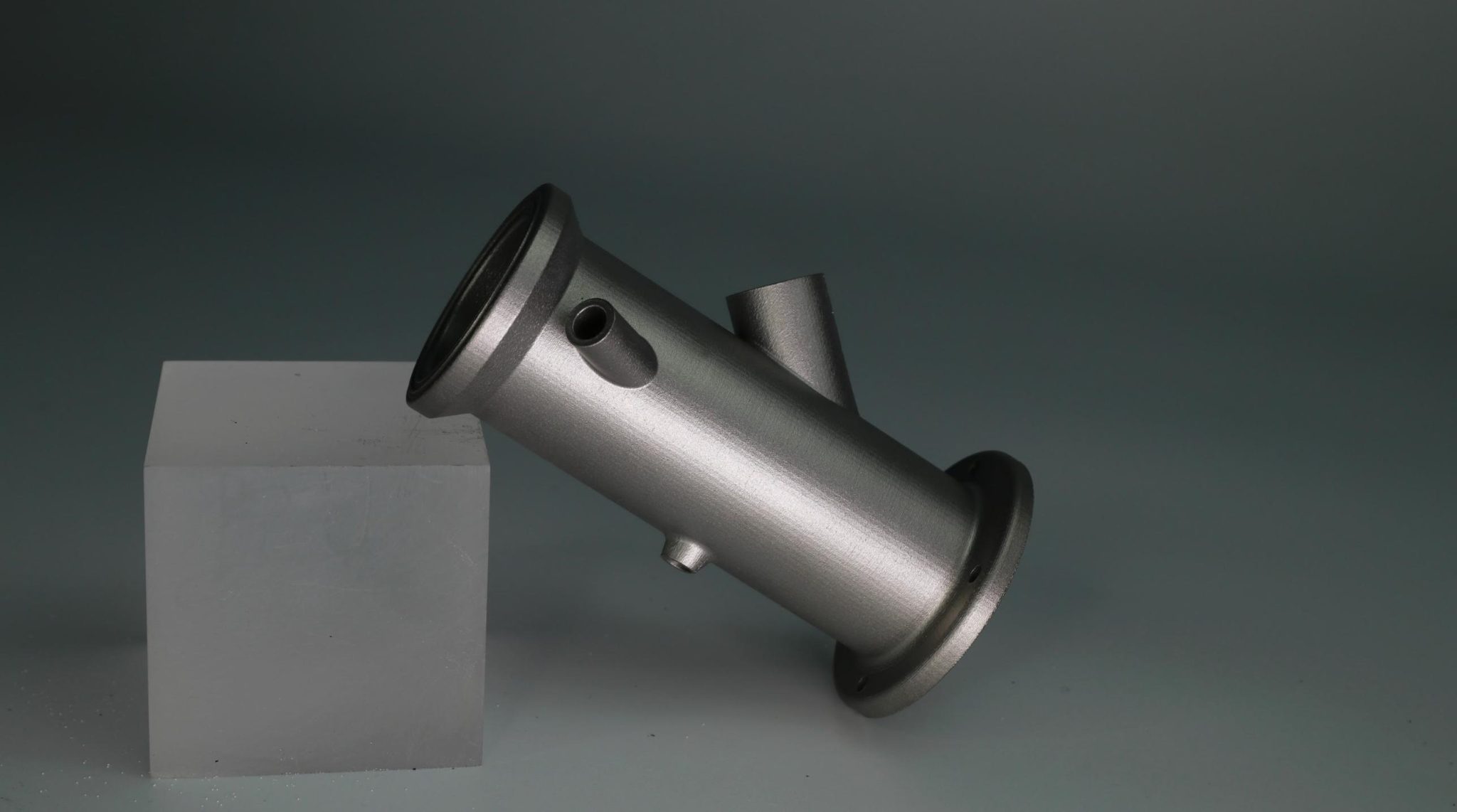
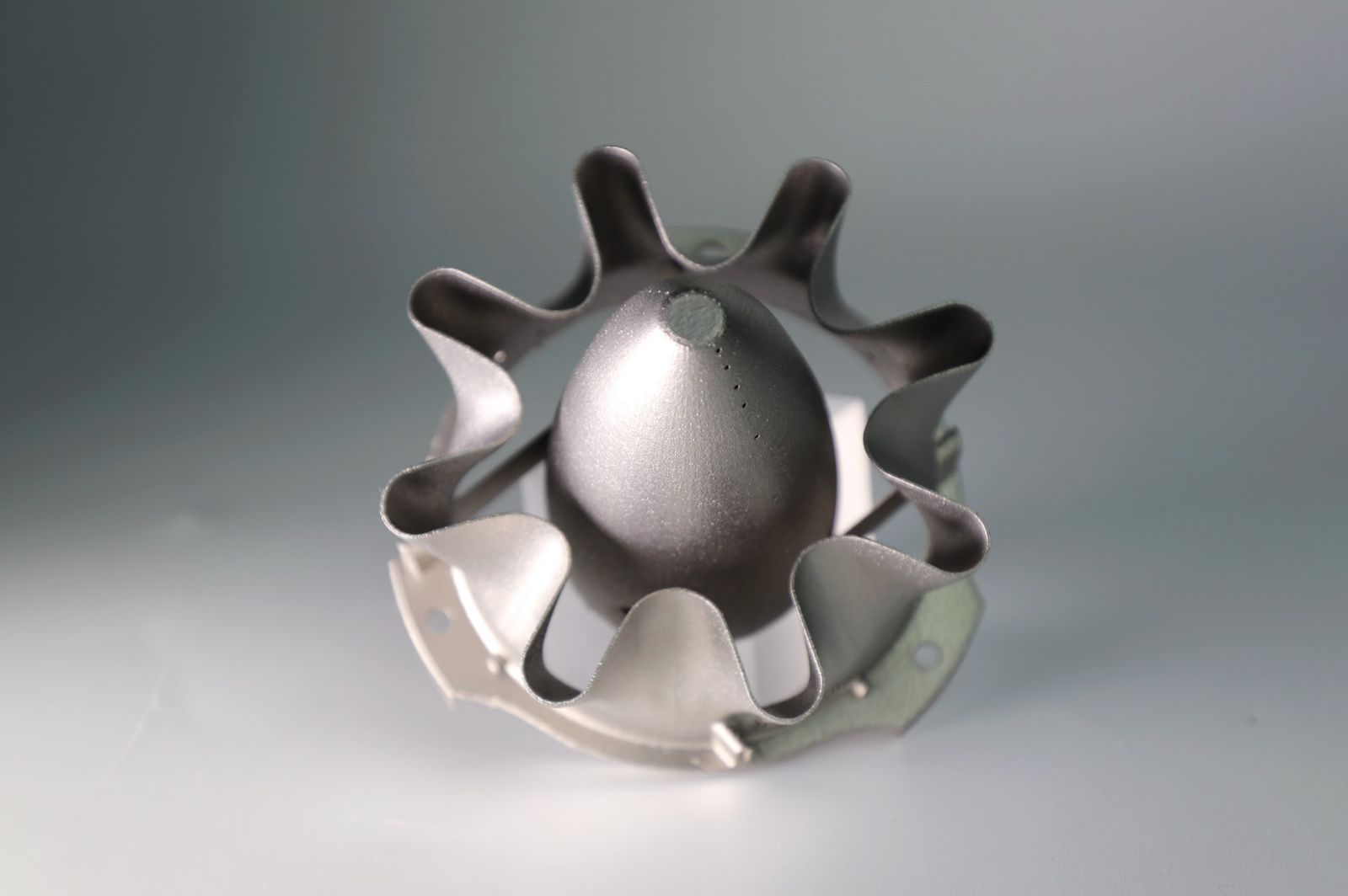
In space, for instance, where thermal conditions can fluctuate quickly, having a satellite structure that doesn’t go in and out of tolerance is key to performance and durability. Similarly, the accuracy of standard molds can lessen over time after many heating and cooling cycles, by using FeNi36, however, 3D printed molds for aerospace and automotive composites retain their dimensional stability. At Formnext 2025 this November, EOS will be showcasing components made from this innovative alloy, including a lobed jet engine nozzle and an optical housing component, both 3D printed on the EOS M290 platform.
EOS Steel 42CrMo4
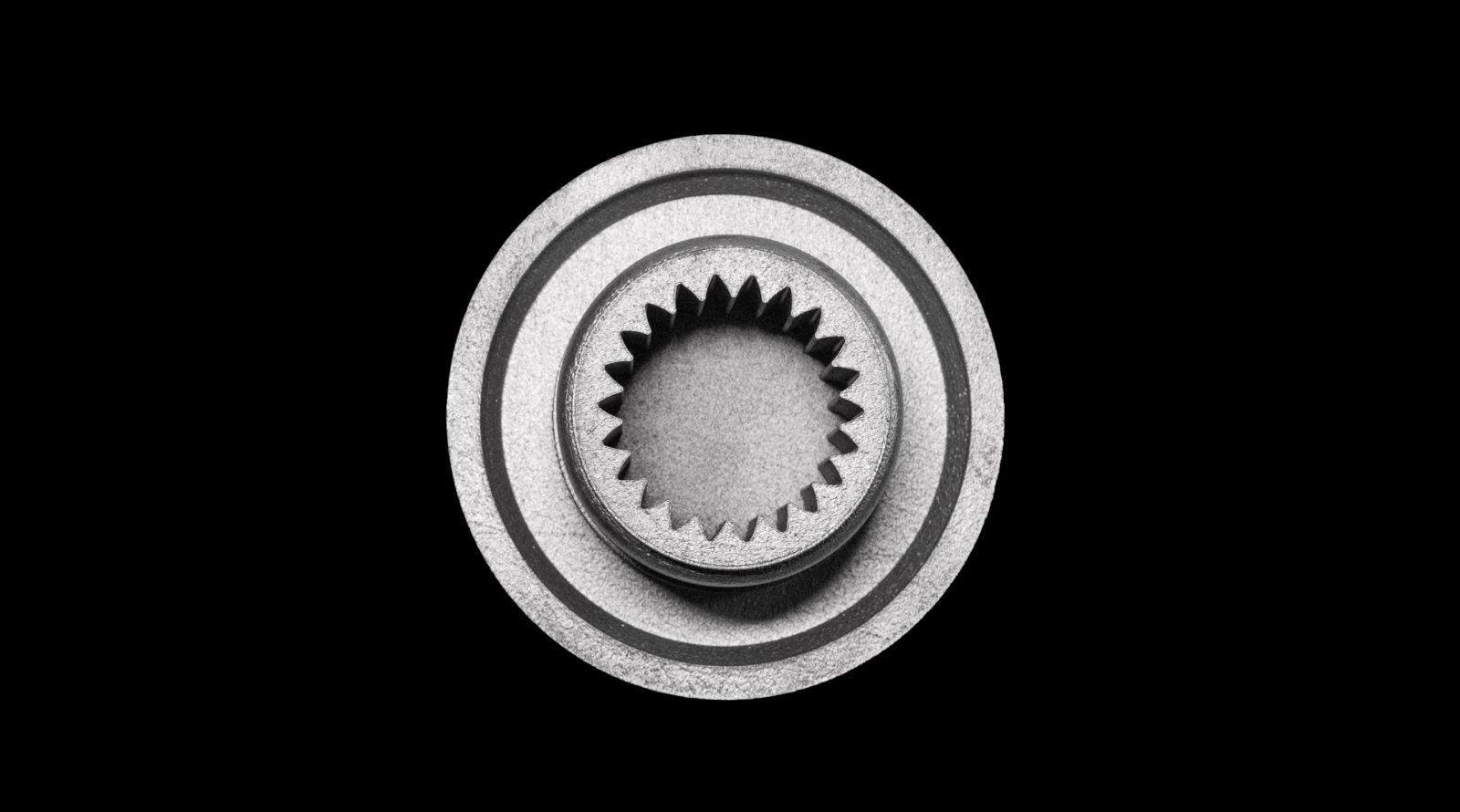
In addition to launching Invar in its special metal materials series, EOS has also introduced a new low-alloyed steel, EOS Steel 42CrMo4. The material, a martensitic carbon-hardening quench and tempering steel containing chromium (Cr) and molybdenum (Mo), offers a favorable combination of properties for demanding industries like automotive. These properties include high tensile strength (1320 MPa), toughness and wear resistance, all of which are beneficial for use cases like automotive gears and shafts, as well as other engineering components.
For optimal material properties, parts printed from EOS Steel 42CrMo4 can undergo additional heat treatments. For this steel alloy, the heat treatment requires two steps: the first is austenizing and quenching, in which the metal part is rapidly cooled to achieve martensitic structure; and the second step is tempering, where it is heated for one to two hours at 550 °C to improve strength and toughness. This particular alloy can also be stress relieved before the quenching and tempering processes, which would consist of heating the part at 600 °C for two hours followed by cooling in air.
At least initially, EOS Steel 42CrMo4 is compatible with the EOS M290 3D printer, however it is possible that the material will be qualified for larger platforms to meet demand. Ultimately, this new alloy has the potential to transform how automotive engineers develop and explore more lightweight structures, unlocking access to faster lead times and greater supply chain resilience.
EOS NickelAlloy C22
EOS is growing its nickel alloy portfolio with the launch of NickelAlloy C22, a nickel-chromium-molybdenum alloy engineered for optimal corrosion resistance. The material is also characterized by other properties, including high strength and exceptional toughness, which make it ideal for applications in demanding environments, such as in chemical processing plants, aerospace, marine engineering, food processing and more.
NickelAlloy C22 is highly stable and can resist various types of corrosion, including pitting, crevice and stress corrosion. The alloy is also resistant to oxidizing gasses, aggressive acids, seawater and sterilizing agents, which makes it ideal for printing parts that must withstand harsh environments while also benefiting from design complexity, like valves, heat exchangers and pumps.
“C22 resists localized corrosion mechanisms, extending component life and preserving the purity of chemical reactions,” EOS says. “Its combination of strength and ductility enables thinner walls, lighter designs and complex flow-optimized shapes—achievable only through AM.”
EOS StainlessSteel 316L-4404
The third material unveiled by EOS this past month is StainlessSteel 316L-4404, a high-performance austenitic stainless steel alloyed with molybdenum. Compared to standard 316L, the new stainless steel powder is considered more industrial grade, offering enhanced corrosion resistance in chloride environments, along with high ductility, toughness and strength. This creates opportunities for 3D printing structures and components in areas like chemical processing, food production, water handling and marine/maritime.
From a user’s perspective, EOS’ new stainless steel powder—based on a 316L variant already common across European industries—can be integrated easily into existing workflows that utilize EOS’ standard 316L. This is because the 4404 powder can be used with all the same material parameter sets as standard 316L. EOS StainlessSteel 316L-4404 can undergo heat treatments (optional according to DIN EN 10088-3) to obtain enhanced properties, including stress relief and solution annealing.
StainlessSteel 316L-4404 is EOS’ sixth stainless steel grade and is compatible with several of the company’s systems, including EOS M 290, EOS M 400, EOS M 400-4 and EOS M 300-4.
Hearing and meeting industry demands
Overall, EOS’ material portfolio growth is informed by the users and adopter industries keen to expand their use of metal additive manufacturing to new areas and applications. By adapting industrial metal alloys like Invar, 316L-4404, 42CrMo4 and C22 for its metal AM solutions, EOS is enabling industries to further exploit the benefits of additive manufacturing—like part consolidation and topology optimization for superior cooling, flow and lightweighting properties—and combine them with specific material properties.
“With these additions, we continue to expand our materials portfolio to meet the most demanding industry requirements,” commented Hanna Pirkkalainen, head of product, EOS Oy. “Whether it is the unmatched thermal stability of EOS FeNi36, the corrosion resistance of NickelAlloy C22, or the accessibility of widely used steels like 42CrMo4 and 316L-4404, we are enabling our customers to innovate faster, address supply chain challenges and bring additive manufacturing into new applications.”