Italy's NUTRI3D project uses 3D printing to turn fruit waste into customized, nutrient-rich snacks, advancing sustainable food R&D.
A new project out of Italy is leveraging 3D printing technology to develop nutrient-rich foods using fruit processing byproducts and plant cell cultures. The innovative project, called NUTRI3D, is spearheaded by ENEA, the Italian National Agency for New Technologies, Energy and Sustainable Economic Development, with the support of CREA, the Food and Nutrition Research Center.
3D printed food has advanced in recent years, with some products finally making it onto the general market, such as Barilla’s 3D printed pasta and Revo Foods’ plant-based fish products (recently reviewed by our very own Davide Sher). The NUTRI3D project fits into an area of 3D printing food that is admittedly still in a more R&D phase. This area is interested in creating edible morsels that are jam packed with nutrients and can even be customized to contain specific nutrient profiles.
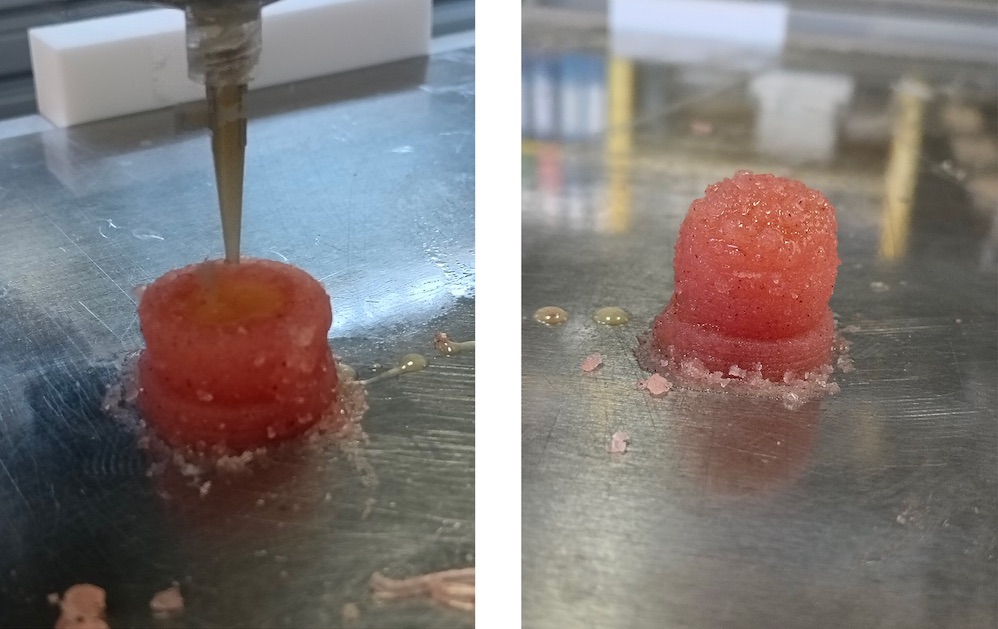
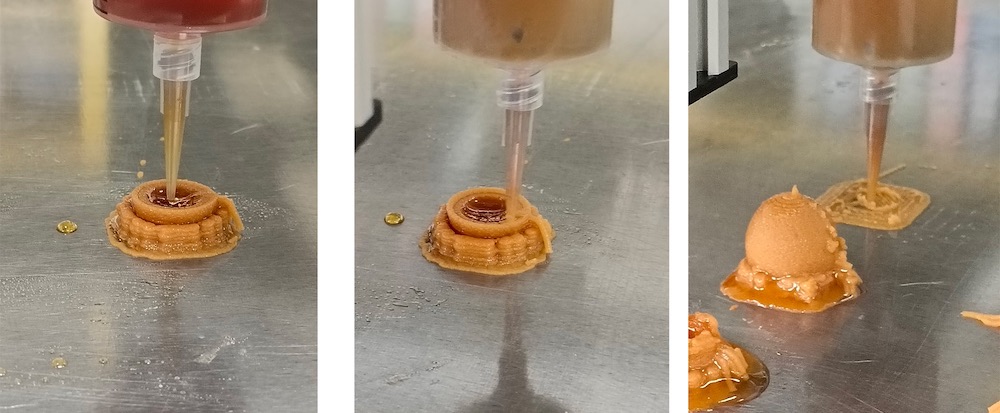
Within this context, the Italy-based project is developing one-bite snack bars and spheres (called honey pearls) that are made from plant cell cultures and byproducts derived from fruit processing. The project believes the use of plant cell agriculture and 3D printing will play an important role in feeding a growing global population on shrinking resources.
“The impact of climate change and the scarcity of new arable land will make it increasingly difficult to ensure the supply of high-quality plant-based foods,” explained Silvia Massa, Head of the Agriculture 4.0 Laboratory at the ENEA Casaccia Research Center and ENEA scientific coordinator of the NUTRI3D project. “In this context, developing innovative production and manufacturing systems—such as plant cell agriculture and 3D printing—represents a strategic approach to producing sustainable, health-promoting foods, even from agri-food by-products, thereby contributing to a healthy and safe diet.”
The 3D printed foods, made on a 3D printer prototype developed by private tech R&D firm Elthub, could also be used to feed astronauts in space and to deliver specific nutrient combinations to people in need. The printed honey pearls are made from an ink made of fruit byproducts (such as apple peels) enriched with plant cells, which according to the researchers improves the food’s texture and juiciness.
The NUTRI3D project is informed by an ENEA survey that asked over 400 consumers to reveals their thoughts on 3D printed food. This study, published in Innovative Food Science & Emerging Technologies, found that 59% of people would be willing to buy food made using plant cell culture and 3D printing and saw the health benefits of this type of consumable. For others, the hurdles that would prevent them from buying such products were related to information barriers.
“Data from the online survey showed that awareness of the product’s innovative composition increased both interest and attractiveness, suggesting that consumer education and transparent communication are key factors influencing food choices,” said Paola Sangiorgio, researcher at ENEA’s Regenerative Circular Bioeconomy Laboratory. With more education on the environmental and health benefits of 3D printing food, it seems possible and even likely that more and more people would get on board.