KIRI Innovation has closed a Series A financing package, raising tens of millions of U.S. dollars in total at current exchange rates.
Huawei Hubble, 37 Interactive Entertainment, and several other investors joined the round. The funds will be used to lower the barrier to 3D reconstruction, improve reconstruction clarity, explore 4D dynamic reconstruction, and support marketing.
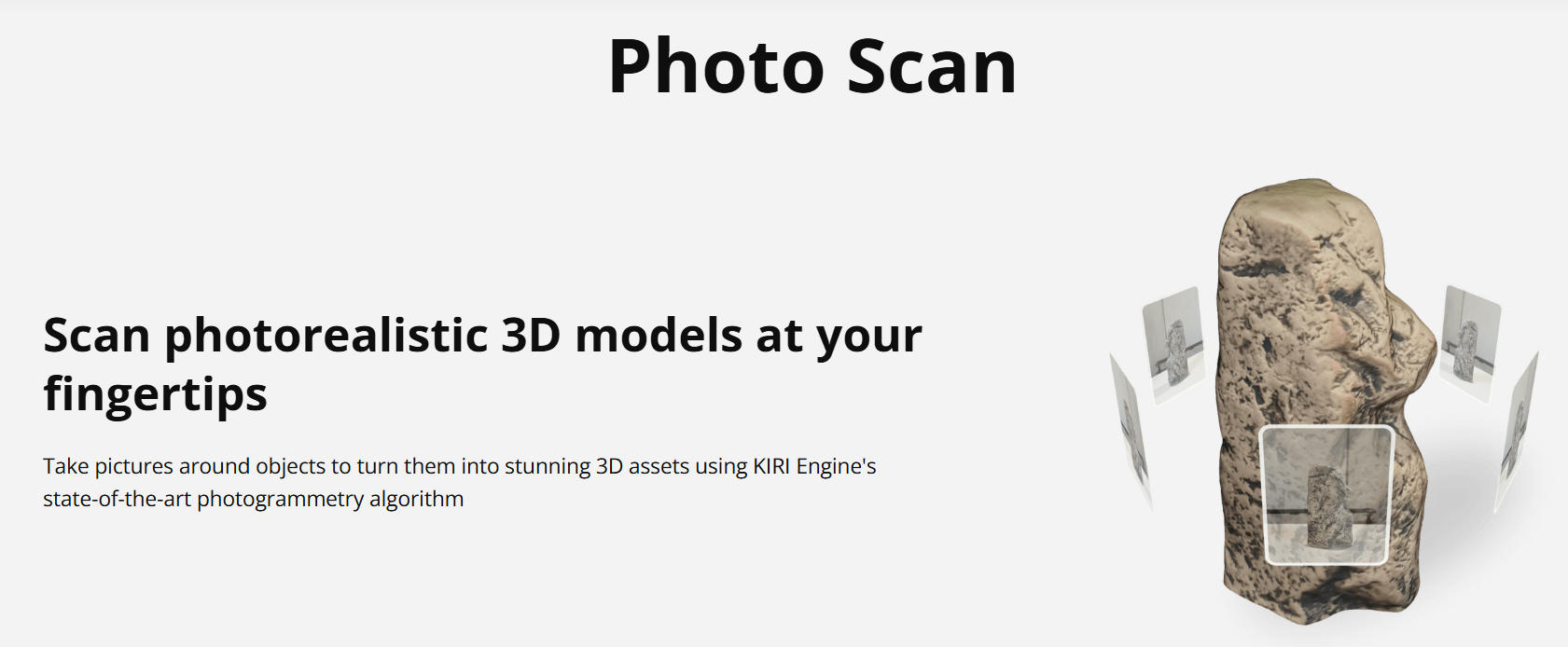
The company runs two product lines. KIRI Engine serves professional 3D users. They photograph real objects with a phone to create 3D models, which can then be imported into gaming, film and TV, or 3D printing workflows. It has already attracted more than 2 million professional creators. Remy targets everyday consumers. It first launched on HarmonyOS in October 2025. Users follow AR prompts to shoot a video, and the cloud reconstructs an “immersive space” that can be viewed in 360 degrees, zoomed, and explored in first-person view. It hit 1 million downloads within nine days, has about 2.8 million cumulative users, and nearly 700,000 monthly active users.
For 3D printing, scanning is the entry point. Once a real object is scanned into a model, it can be exported directly in print-ready formats, greatly lowering the barrier from “seeing something” to “printing something.” KIRI Engine uses 3D Gaussian Splatting (3DGS) to reproduce complex lighting and spatial detail. It can also convert 3DGS into meshes, linking back to common 3D software and printing workflows.
Competition is tough. Mature scanning tools already exist overseas and in China, and generative AI is closing in. The boundary between scanning and generation is blurring: creative assets may increasingly be generated, while personal memories and physical-object archiving still prioritize fidelity to reality.
Huawei Hubble’s investment may reflect confidence in the full “capture—design—manufacturing” chain. But competition in professional tools is intense, consumer retention and willingness to pay remain unproven, and 4D dynamic reconstruction is still far from commercialization. Going forward, user retention, paid conversion, and the cost per reconstruction will be the numbers to watch.
Huawei Hubble’s investment may reflect confidence in the full “capture—design—manufacturing” chain. But competition in professional tools is intense, consumer retention and willingness to pay remain unproven, and 4D dynamic reconstruction is still far from commercialization. Going forward, user retention, paid conversion, and the cost per reconstruction will be the numbers to watch.