Home  >  News

March 7, 2026      News      8883

3D Printing Restores Decapitated Statue: Digital Rebirth of a Century-Old Artifact

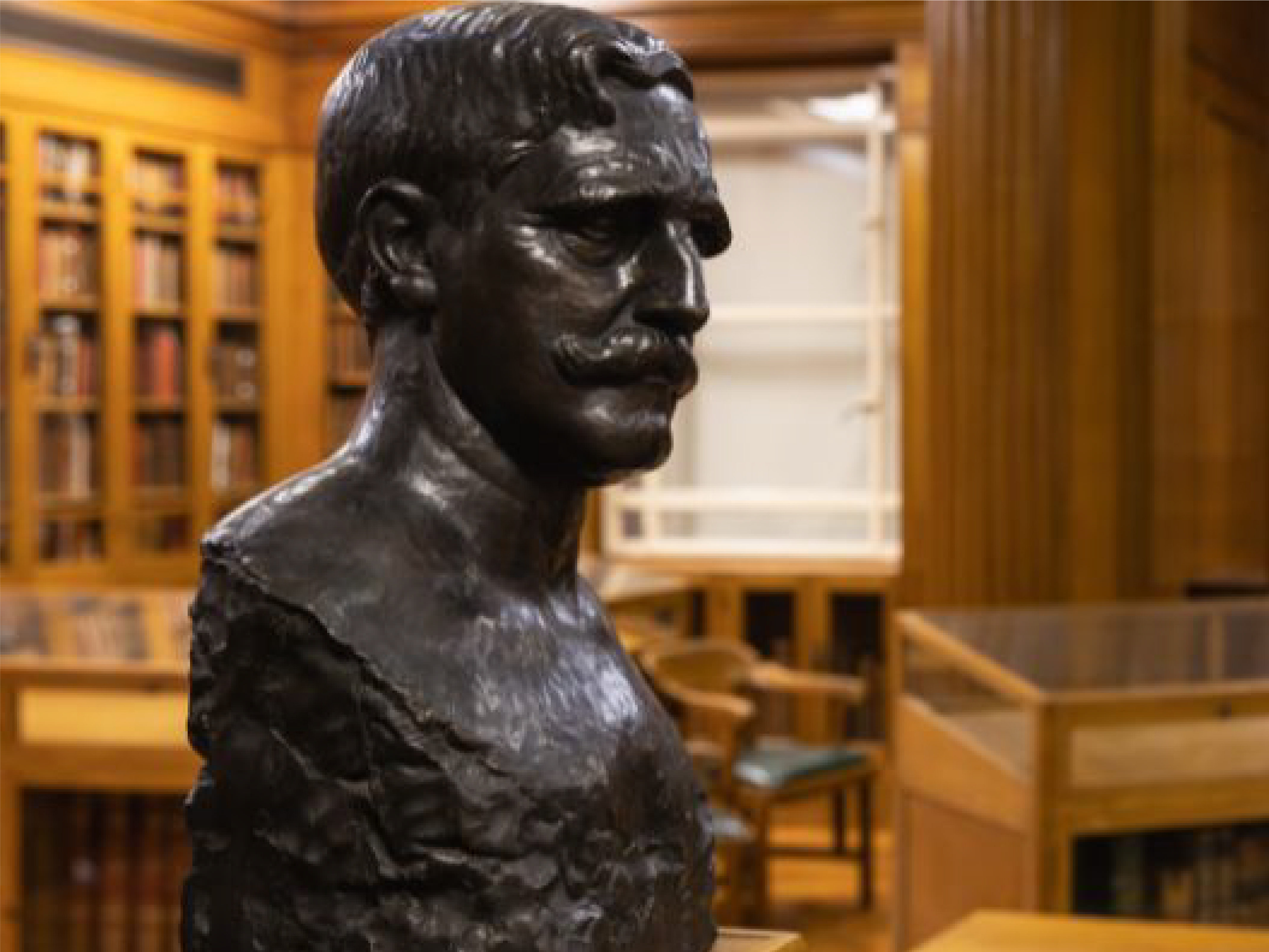
At the new exhibition "Who am I to you?" at the University of Leeds' Treasures of the Brotherton gallery, a long-decapitated statue has been given a new lease on life in a special way—successfully restored using 3D printing technology.
The statue's head was damaged years ago, and it had remained in the archives for decades, its identity unknown. It wasn't until an archival team was 3D scanning the collection that they unexpectedly discovered the signature of sculptor David Watson Stevenson. Following this clue, the team compared it with a bronze statue at a Glasgow museum and ultimately confirmed that the decapitated statue depicted Robert Louis Stevenson, the 19th-century author best known for writing Treasure Island. The smaller Leeds statue was likely a model for that larger bronze.
To restore the statue, the team based their work on 3D scan data of the Glasgow bronze, 3D printing a custom-fit head to mount on the 60-centimeter-tall figure. The exhibition also made extensive use of 3D printing to create miniature versions of busts, using green glow-in-the-dark filament to both highlight the technology and make historical artifacts more approachable and engaging.
This case demonstrates the potential of 3D technology in cultural heritage preservation. From the UK's National Trust using 3D printing to replace lost statues, to Italian restoration schools incorporating 3D printing into their curriculum, digital tools are making artifact restoration more achievable—especially at a time when traditional restoration skills are increasingly scarce.
If you visit Leeds before October 2026, you can see this "reborn" statue for free at the exhibition. On March 17, 2026, the University of Leeds will also host an event showcasing how 3D technologies are enabling new interpretations of historical portrait busts.


©2025 3dptimes.com All Rights Reserved