Miniature train in LEGO Icons Holiday Express holiday train set marks additive manufacturing milestone after nearly a decade of development
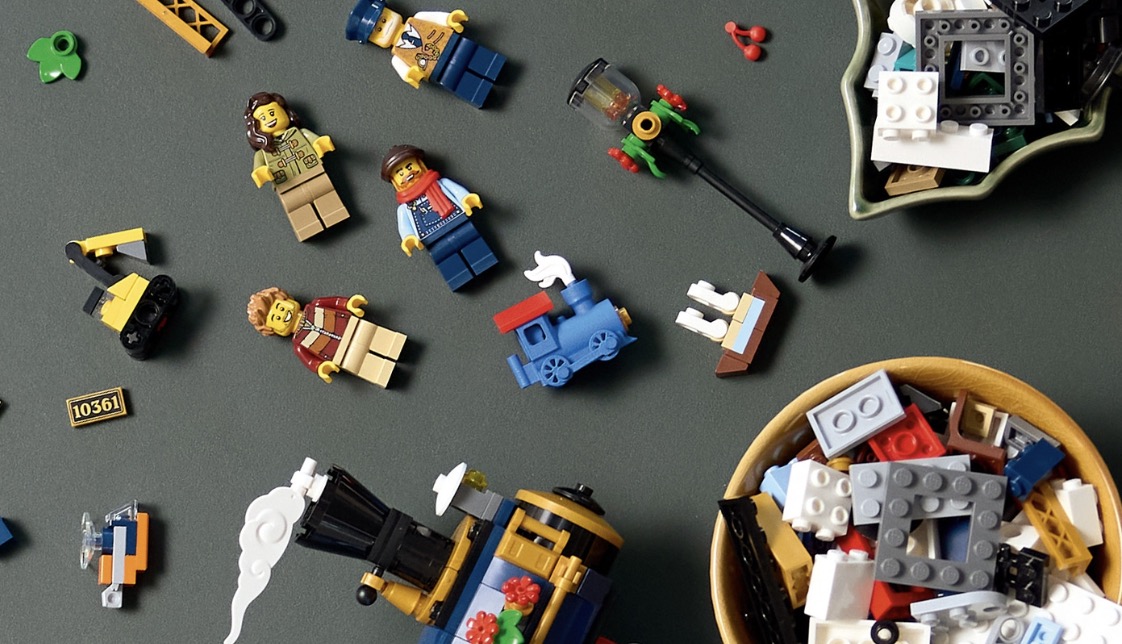
With the official release this past October, the LEGO Group has released its first-ever serially produced 3D printed piece in a commercial product, marking a significant step in the company’s exploration of additive manufacturing. The miniature blue train included in the LEGO Icons Holiday Express Train (10361), released in October 2025, features moving wheels and a detailed chimney—elements that would have been difficult or impossible to produce using traditional injection molding.
The element is the result of a nine-year effort by LEGO’s Additive Design and Manufacturing team in Billund, Denmark, to develop a scalable, high-quality 3D printing system suitable for retail-grade LEGO parts. While the company has long used 3D printing for prototyping, producing single parts could take hours and remained limited to in-house use.
“This feels like a move similar in magnitude to when our founders purchased their first injection molding machine back in the late 1940s,” said Ronen Hadar, Head of Additive Design and Manufacturing at the LEGO Group. “We can make all kinds of geometries that are not possible with injection molding—bricks with internal mechanisms, for example.”
From prototype to production
Developing a system capable of industrial-scale 3D printing necessitated the team to create new workflows from scratch. Unlike injection molding, which is optimized for high-volume consistency, additive manufacturing enables the creation of new shapes and mechanical functions, offering designers a broader creative palette.
The Holiday Express set, an evolution of the 2016 LEGO Creator Expert Winter Holiday Train, was seen as the right opportunity to debut the new capability. The miniature train serves as a scaled replica of the set’s larger locomotive. It includes functional features such as rotating wheels—attributes that made it ideal for demonstrating the technology’s potential.
“It could have been many things,” said Bo Park Kristensen, designer of the miniature train. “But in the end, we decided that this train would be the first mass-produced 3D print in a LEGO box.”
Designer Jae Won Lee, who led development of the main train, collaborated closely with the additive manufacturing team to refine the miniature’s form while ensuring its playability and design cohesion. “They’re designers and they have that creative power to really apply the technology outside of what we thought was possible,” said Ronen.
Toward standardization
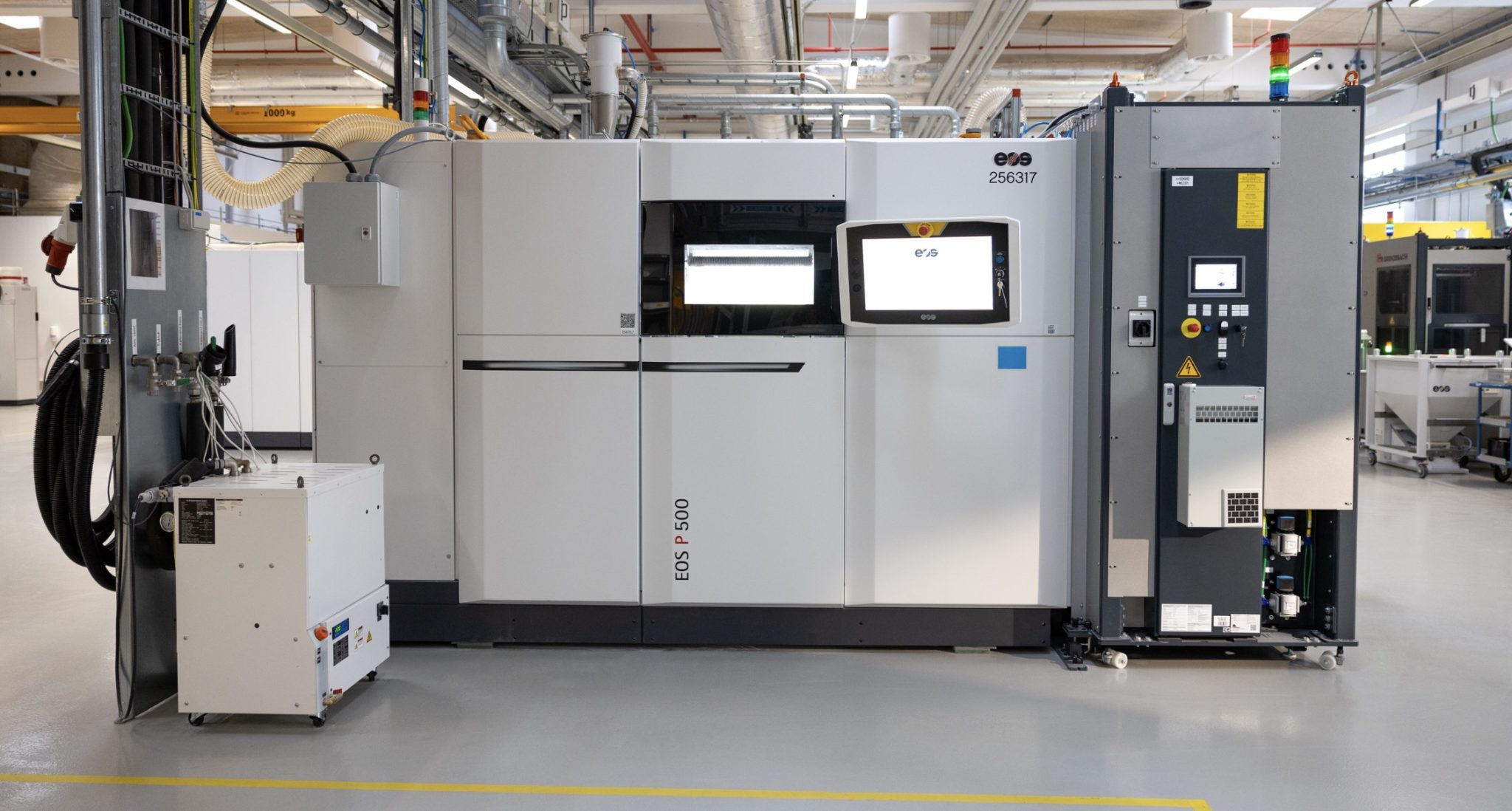
Starting with an EOS P 500 system, the additive team has already doubled output from its initial machines and is continuing to refine both speed and quality. While the current deployment is limited to a single part in a seasonal set, Ronen said the long-term objective is to integrate 3D printing more deeply into LEGO’s design and production workflows.
“We still need to learn more about how to apply the technology, and where to apply it,” he said. “My task is to make 3D printed LEGO elements boring—so people don’t think about how it was manufactured, they just think it’s a cool element that gives them something fun to play with.”
The LEGO Group has not disclosed the number of units produced, but the deployment sets the stage for the broader use of additive manufacturing in future LEGO sets.