3D printing is revolutionizing architecture, as showcased by Yong Ju Lee Architecture, which uses additive manufacturing and sustainable materials to create innovative ecological structures.
As demonstrated at the 2025 Venice Biennale of Architecture, 3D printing is playing an increasingly important role in the world of architecture, enabling creatives to explore the use of new geometries, more agile production methods and sustainable materials. Among the architecture firms interested in leveraging 3D printing is Yong Ju Lee Architecture, a South Korean studio that is using AM to transform how we work with materials to make more ecological structures.
In a recent project, Yong Ju Lee Architecture explored the potential of using robotic 3D printing and mycelium to create a hut on the campus of Seoul National University of Science and Technology. Mycelium, the root-like structure of fungi, is being explored as a sustainable alternative to more traditional building materials like concrete—whose production is responsible for 8% of global CO2 emissions. As the architecture studio says: “the use of organism-based composite materials presents new possibilities for architecture, challenging the non-recyclable and non-degradable nature of inorganic construction materials.”
In this particular project, called Mycelial Hut, the bio-material was turned into functional panels using customized molds. The molds themselves were made using robotic 3D printing, and the architecture team tested out a variety of different mycelial-based substrates to determine which formula of bio-composite would grow best inside the molds and have the best properties in terms of strength and workability. When the panels were ready, they were attached to a wooden frame to create a full-scale hut.
“Mycelial Hut aims to demonstrate the large-scale application of mycelium as a building material through customized molds fabricated by robotic 3D printing,” Yong Ju Lee Architecture writes. “This design-based research produces a bio-hybrid pavilion in which a wooden frame serves as the structural backbone, while customized mycelium panels form the external envelope… Located on the campus of Seoul National University of Science and Technology, this bold installation seeks to make the concept of sustainable architecture tangible and accessible in everyday life.”
There are others in the AM world experimenting and using mycelium. For instance, design studio bioMATTERS has worked with the fungus in combination with clay and waste materials to create a series of 3D printed sculptural vessels. A research team from the University of Washington also experimented with mycelium recently, developing Mycofluid, a compostable 3D printing material made from coffee grounds and mushroom spores that could be used as an alternative to plastic packaging.


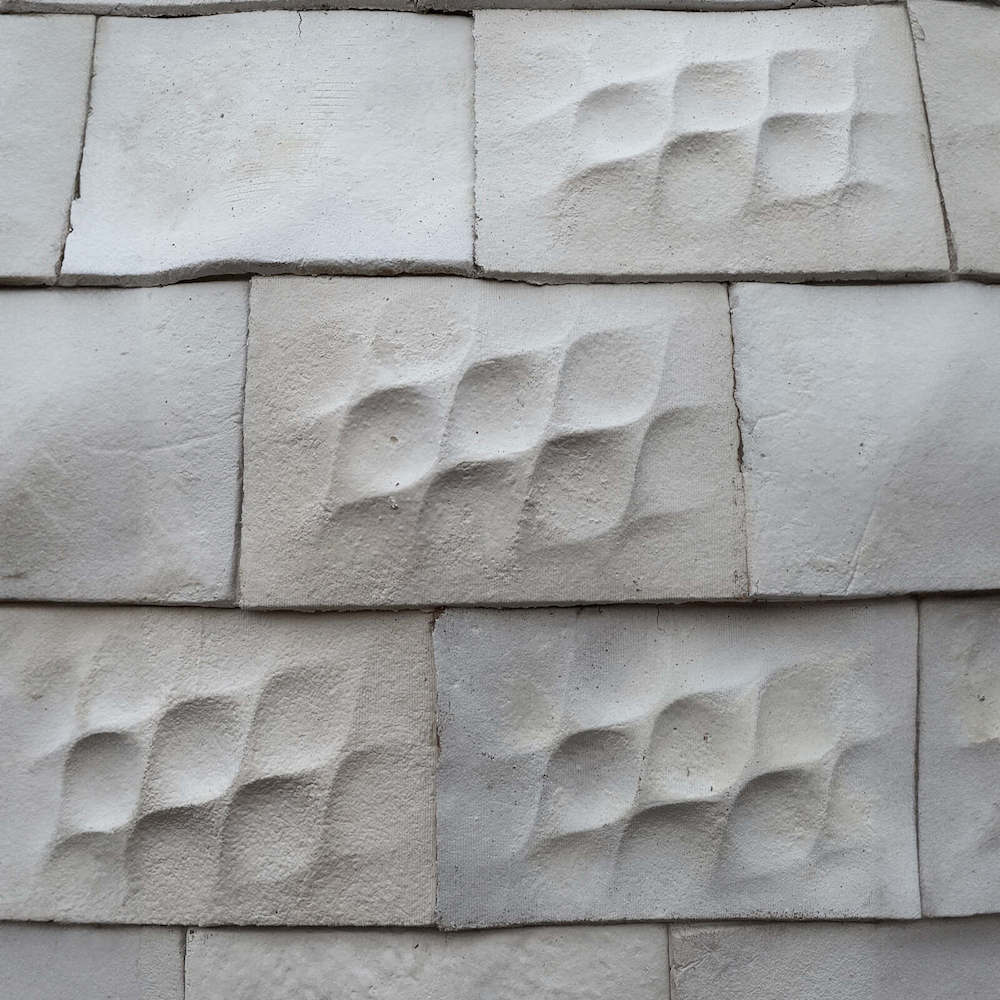 Seong Geun Park, Juhyun Maeng and Yong Ju Lee Architecture
  Seong Geun Park, Juhyun Maeng and Yong Ju Lee Architecture