Home  >  Materials

October 24, 2025      Materials      293

Source: Boston Micro Fabrication (BMF)

In our daily lives, energy-dissipating materials are ubiquitous, from the cushioning soles of running shoes and vehicle shock absorbers to protective packaging for precision instruments. Acting as silent "guardians," they protect people and equipment by converting destructive kinetic energy (such as impact and vibration) into heat or other forms of energy.

Among various materials, polymer-based materials are highly favored for their reusability and strain-rate sensitivity (i.e., the faster the loading, the "stiffer" their response). However, they have long faced two significant technical challenges: (1) The difficulty in simultaneously achieving a high loss factor (a key indicator of efficient energy dissipation, tanδ > 1) and a high modulus (material stiffness, > 20 MPa). Materials with high energy dissipation are often too soft, while those with high stiffness lack sufficient energy absorption capacity. (2) Polymers exhibit excellent energy dissipation under tension, but in many practical applications (such as load-bearing structures and cushioning pads), materials primarily endure compressive stress, which severely limits the utilization of their superior energy dissipation potential.

Recently, a research team led by Professor Ge Qi from the Southern University of Science and Technology and Professor Lu Yang from the University of Hong Kong has successfully developed a novel High Energy Dissipation (HED) polymer using multi-material vat photopolymerization 4D printing technology. Furthermore, they ingeniously overcame the aforementioned limitations through a "Compression-to-Tension" (C2T) structural design. These findings were published in Advanced Functional Materials under the title "Adaptive Energy Dissipator with Compression-to-Tension Design."

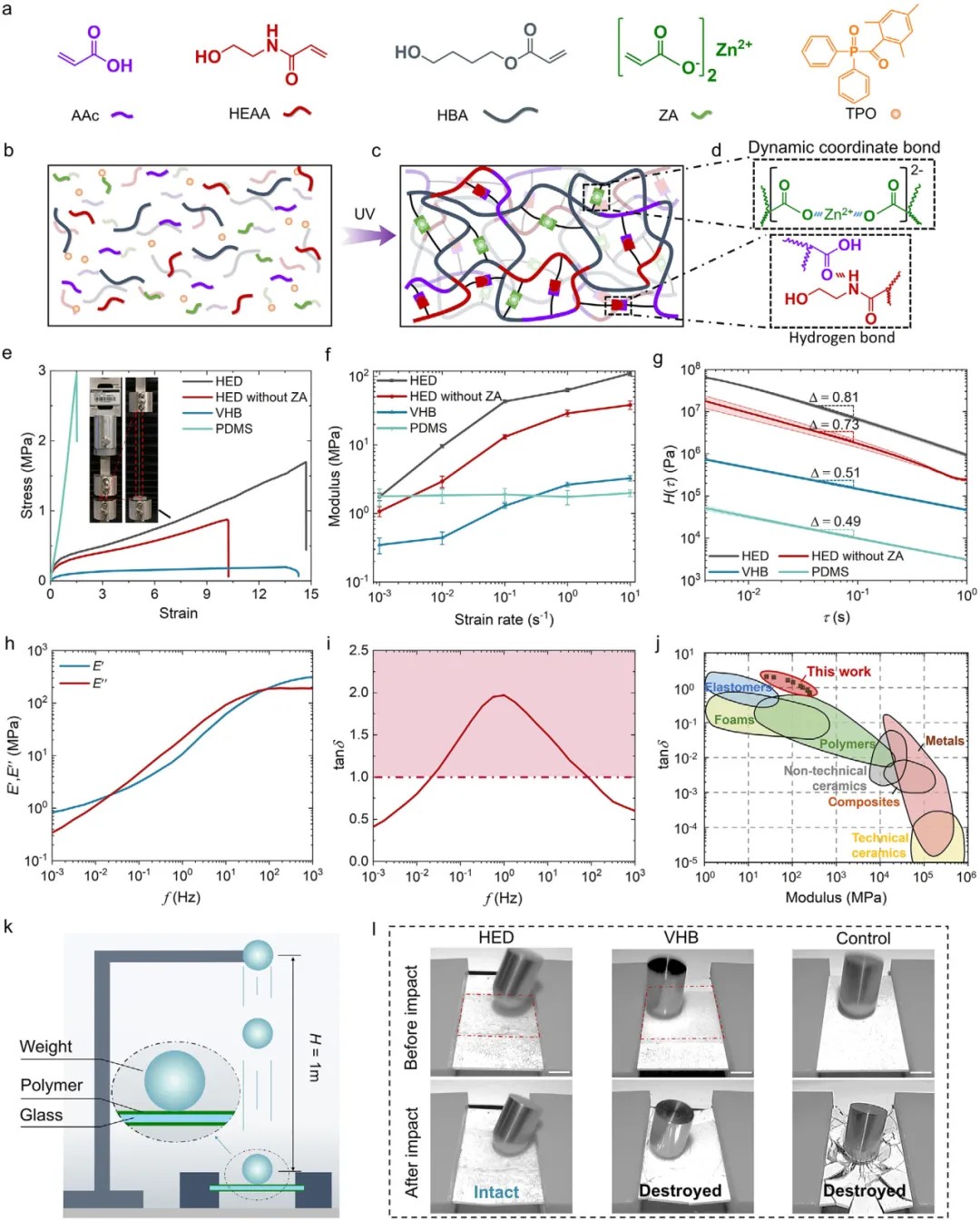
As shown in Figure 1, the team first developed a polymer named HED. Its structure incorporates two types of dynamic physical crosslinks: hydrogen bonds and dynamic coordination bonds. This can be visualized as an internal spring network with a dual insurance mechanism: the abundant hydrogen bonds are responsible for rapid response and energy dissipation, while the high-strength coordination bonds provide a rigid backbone. This synergistic effect endows the HED polymer with exceptional properties:

High Loss Factor: tanδ up to 2.0 (indicating high energy dissipation efficiency).

High Modulus: 110.5 MPa (possessing the rigidity required for structural materials).

Outstanding Energy Dissipation Density: 26.8 J cm⁻³ (high impact energy absorption per unit volume).

Chemical characterization and property analysis of the HED polymer.
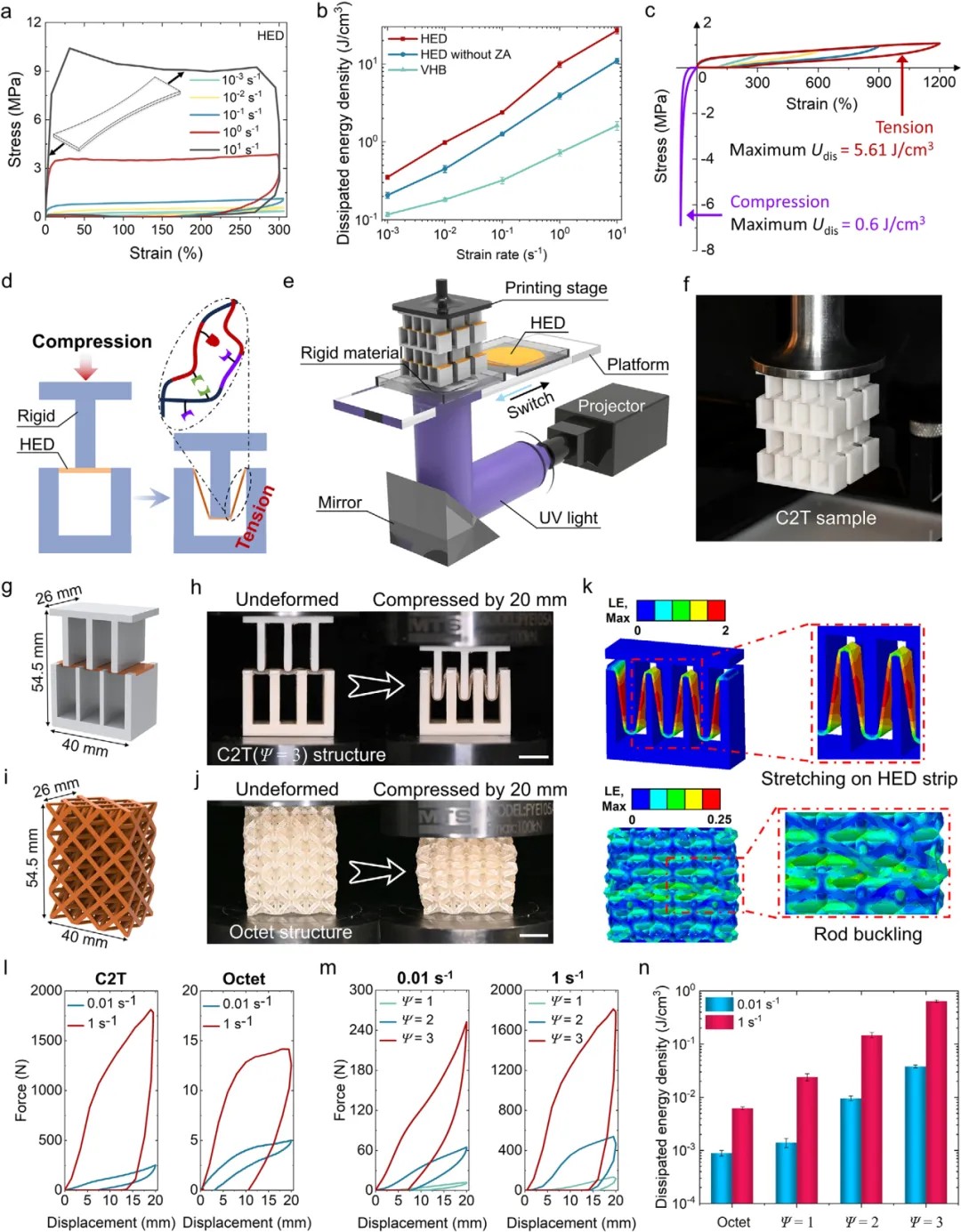
Secondly, to address the issue of polymers being unable to fully utilize their energy dissipation capacity under compression, the team designed a Compression-to-Tension (C2T) transformation structure (shown in Figure 2). This structure utilizes multi-material 3D printing technology to integrate rigid frames with HED polymer strips. When the entire structure is compressed, the internal HED strips are significantly stretched, cleverly converting the external compressive force into tensile deformation of the material. The energy dissipation capacity of this C2T structure is approximately 100 times greater than that of a traditional octet lattice structure made directly from the HED polymer! The research team further demonstrated the application potential of this structure in biomedical and precision engineering fields by incorporating it into artificial intervertebral discs and low-frequency vibration isolators.
Compression-to-Tension design enhancing energy dissipation under compression
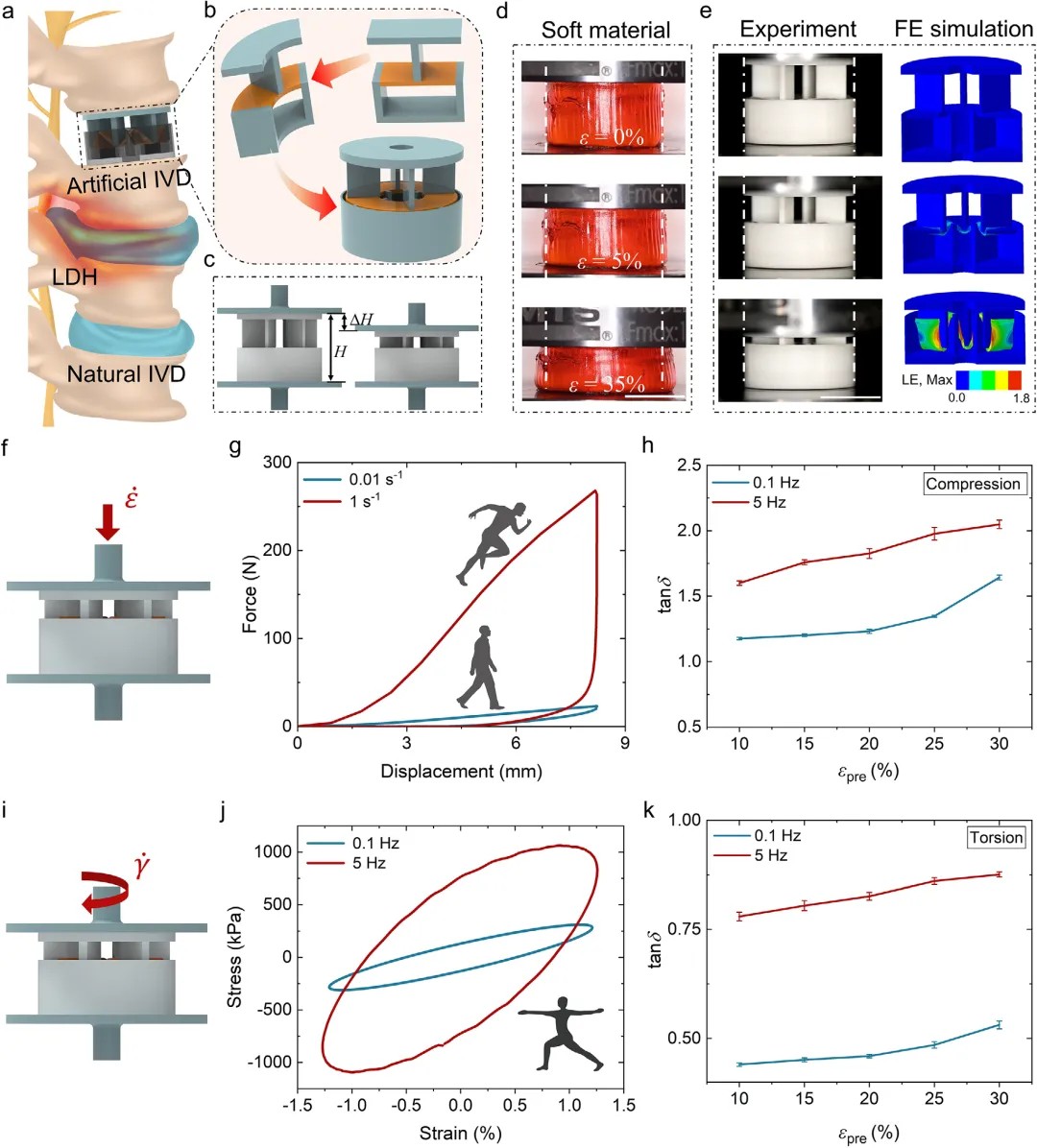
As shown in Figure 3, by rotating the 2D C2T structure, a 3D artificial intervertebral disc was designed. It not only avoids lateral expansion under body weight (pre-compression) to protect the spinal cord but also intelligently adapts to different activity intensities: providing moderate cushioning during walking (low strain rate) and becoming stiffer to dissipate more energy during running (high strain rate). It also exhibits excellent energy dissipation capability under torsional loads (simulating twisting movements).
Design and characteristic analysis of the artificial intervertebral disc based on the C2T structure.
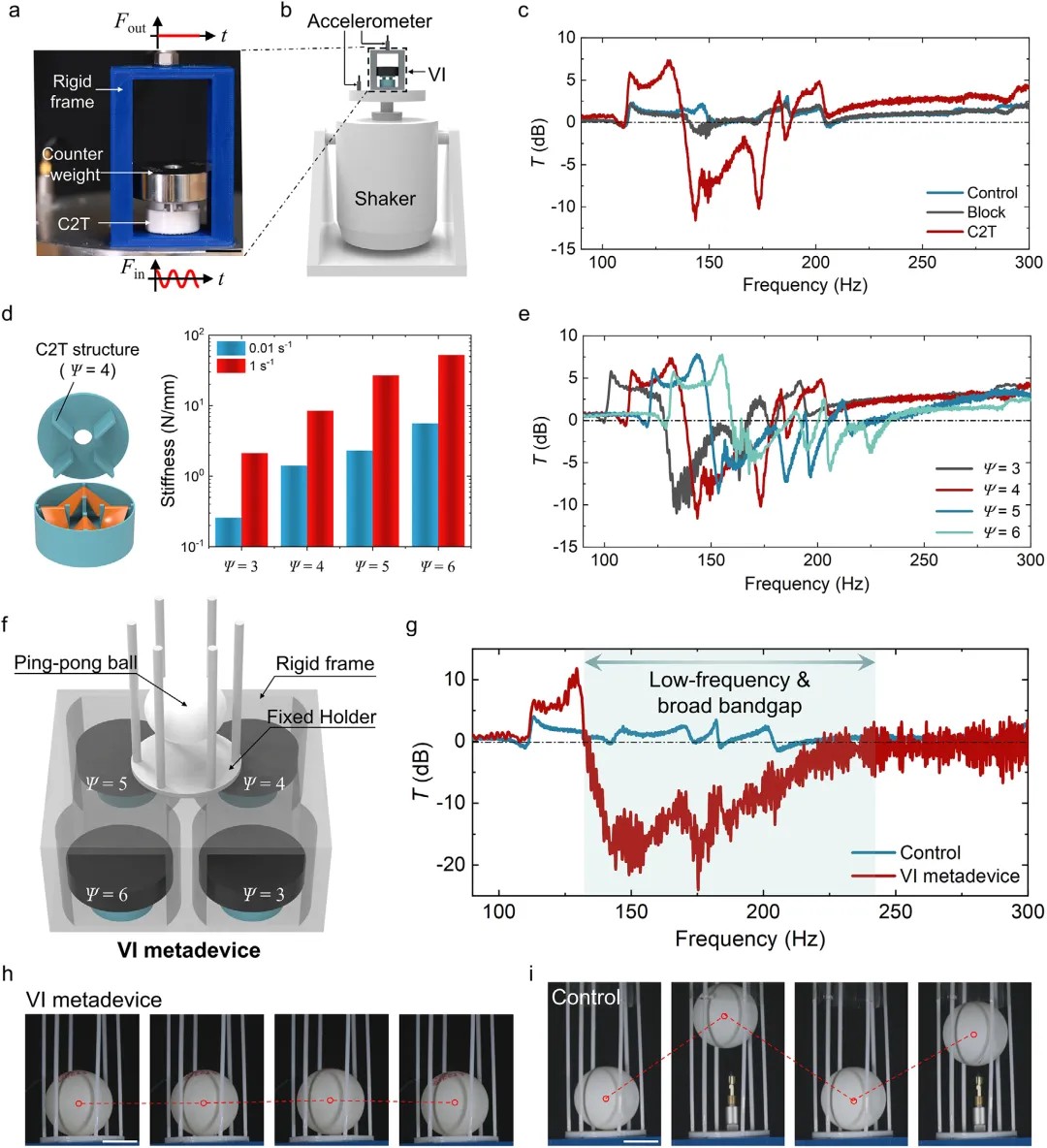
As shown in Figure 4, vibration isolation units were constructed using the C2T structure. By varying the number of structural segments, the isolatable vibration frequency range (bandwidth) can be precisely tuned, similar to tuning an instrument. Combining multiple units with different segment numbers into a "metadevice" enables vibration isolation across a wider frequency band. In a vivid demonstration, this metadevice kept a ping pong ball stable in a vibration environment of 150-250 Hz, whereas the ball in the control group bounced incessantly.
Vibration isolation unit based on the C2T structure
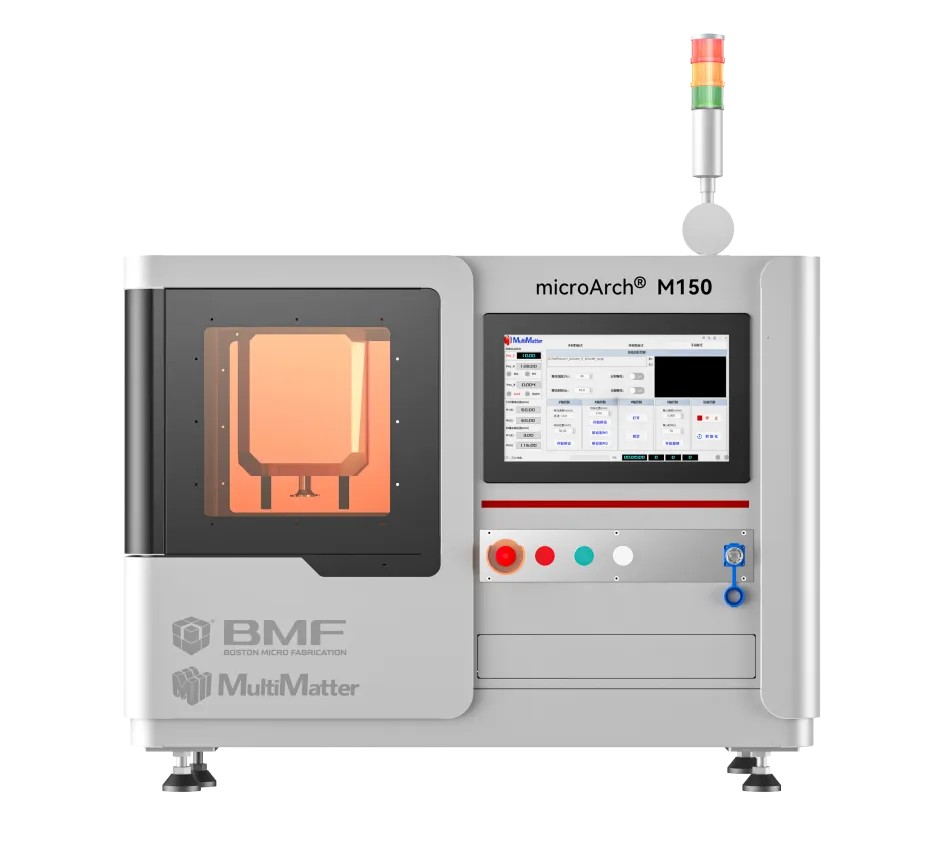
microArch® M150
BMF, in collaboration with Zhiduo 3D, has launched a new multi-material 4D printing solution – the microArch® M150. It supports the integrated fabrication of structures using multiple functional materials such as rigid resins, elastomers, hydrogels, shape-memory polymers, and conductive elastomers.

Centrifugal Multi-Material Switching Technology: Maximum centrifugal speed of 10,000 rpm, enabling rapid dynamic material switching within 60 seconds. A single print job supports up to 2,500 material transitions.

Dedicated Multi-Material Slicing Software: Self-developed multi-material model slicing system supports slicing models with materials distributed arbitrarily in space, achieving a slicing speed of up to 500 layers/minute.

Compatibility with Various High-Performance 4D Printing Functional Materials: Adapts to a diverse 4D printing material system with viscosity ranges from 5 to 5,000 cps.

Integrated Fabrication of Multi-Material, Multi-Functional Coupled Structures: Enables the integrated formation of highly complex, high-precision, multi-functional coupled structures. Supports simultaneous printing with 3 materials, allowing for in-layer and inter-layer material switching, with an in-layer transition zone between materials of < 100 µm.

Original Article Link: https://doi.org/10.1002/adfm.202521393


©2025 3dptimes.com All Rights Reserved