February 2, 2026      Applications      12500

Renowned 3D Printing Fashion Designer Iris van Herpen Debuts Major Exhibition "Sculpting the Senses" at Brooklyn Museum on May 16, Featuring Over 140 Haute Couture Masterpieces Inspired by Nature's Elements

On May 16, the renowned 3D printing fashion designer Iris van Herpen will make her North American debut with the large-scale exhibition "Sculpting the Senses" at the Brooklyn Museum. The exhibition will bring together over 140 of her representative haute couture works, drawing inspiration from natural elements such as water, air, coral reefs, and space.

3D Printing as a Medium Bridging Science, Nature, and Bodily Perception

Van Herpen is celebrated for her fashion philosophy that transcends traditional fabrics and threads. She boldly integrates 3D printing technology, innovative materials, and scientific principles from fields such as biology, physics, and astronomy to create fashion pieces that appear alive. Her designs not only interact with the wearer’s body but also transform dynamically with movement. The exhibition will guide visitors from the depths of the ocean to the vastness of the universe, exploring bodily movement, the perception of light and sound, natural structures, and the ways humans survive in a constantly changing environment.
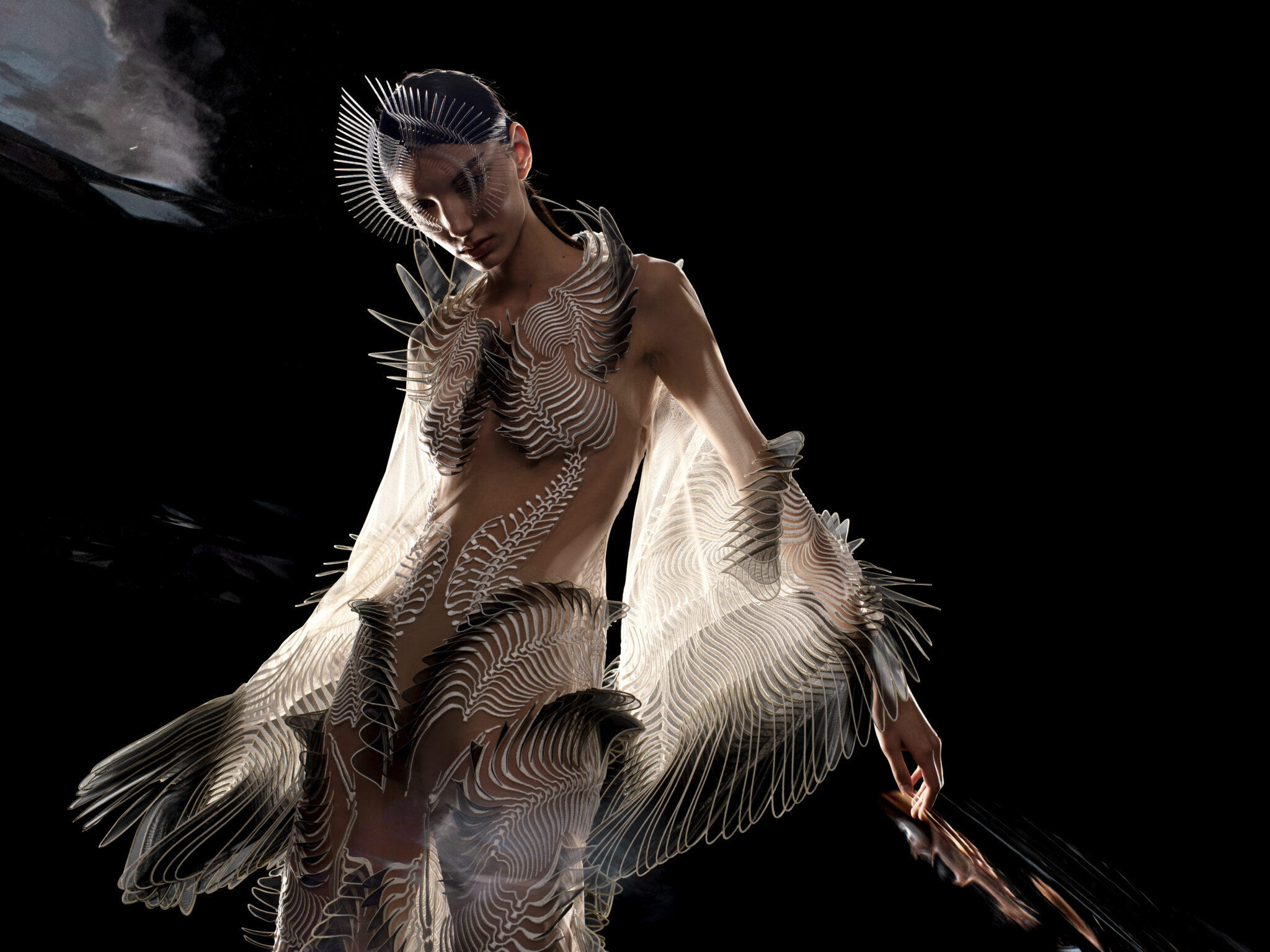
△ Iris van Herpen’s Labyrinth Kimono Dress from the 2020 "Sensory Seas" collection, made from layered glass organza, crêpe, and tulle.
A highlight of the "Sculpting the Senses" exhibition is that van Herpen’s designs will be displayed alongside contemporary artworks, design objects, and real scientific specimens such as corals, fossils, and bones. These elements not only serve as sources of inspiration for her creations but also offer visitors a fresh perspective on how science is translated into fashion.

The exhibition will also showcase van Herpen’s creative process. The museum has recreated a studio space, allowing visitors to gain insight into the behind-the-scenes production of her haute couture garments. Originally launched in Paris in 2023, the exhibition has since toured globally, making stops in Australia, Singapore, and the Netherlands. The Brooklyn showcase marks her first major exhibition in New York.

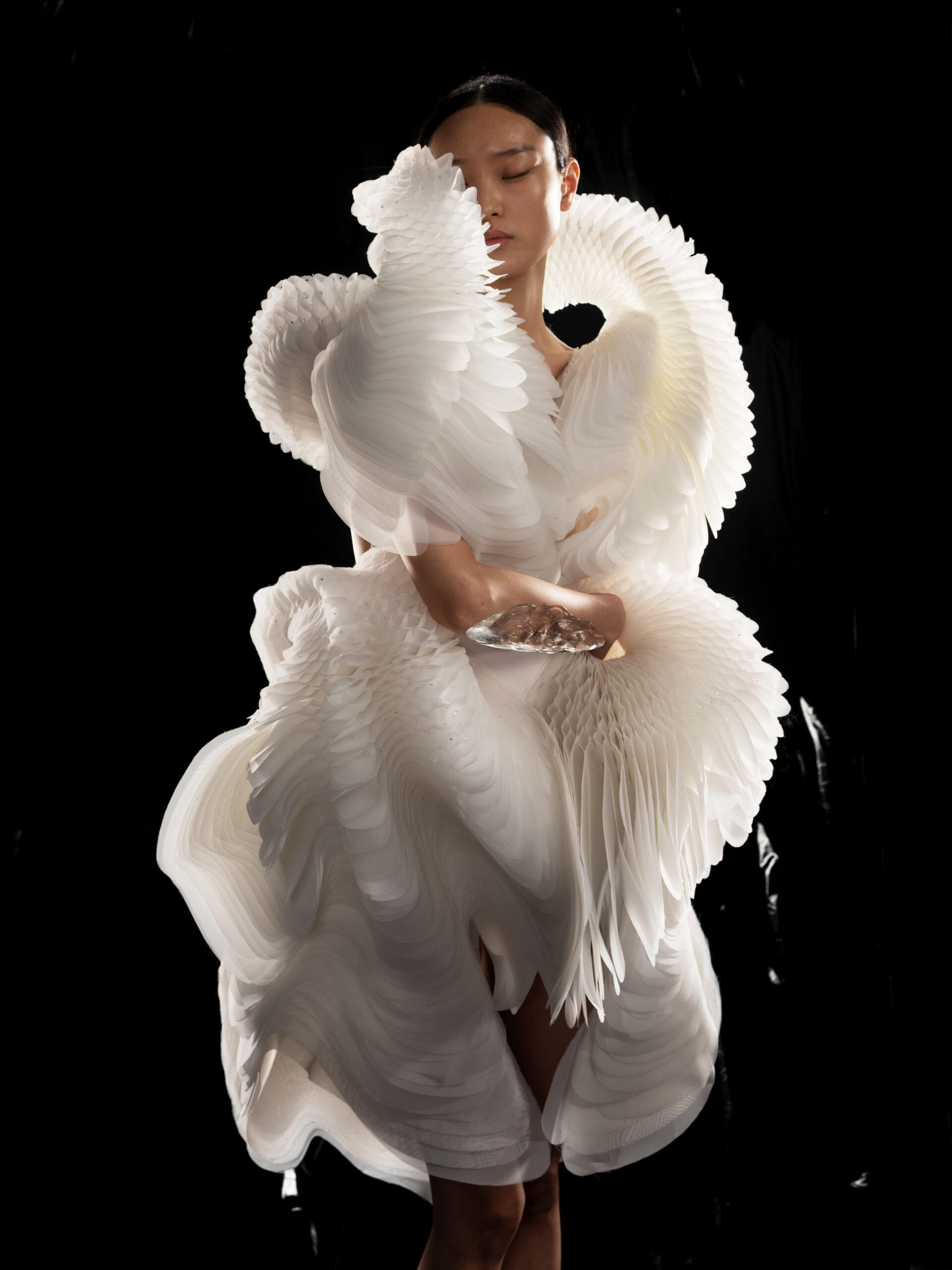
△ Iris van Herpen’s Sensory Seas Dress from the Sensory Seas collection, made from PETG and glass organza.
Redefining "Wearable" with 3D Printing

Over the years, van Herpen has continuously explored new applications of 3D printing technology, often combining it with traditional craftsmanship. Some of her works feature structures printed with inspiration from bones or corals, while others integrate 3D-printed components with fabrics like silk. As such, the technology does not replace fashion craftsmanship but rather complements it. For van Herpen, 3D printing enables the creation of dynamic, flowing, and growing forms akin to those found in nature—something that fabrics alone cannot achieve.
△ The Morphogenesis Dress from the 2020 "Sensory Seas" collection, made from laser-cut and screen-printed mesh, duchess satin, and laser-cut acrylic.
Van Herpen excels at using specialized 3D printing and digital fabrication tools. Early in her career, she employed technologies like PolyJet printing to produce extremely thin prints—tiny, delicate components that could be stitched onto fabrics. Over time, she began combining 3D printing with other techniques, such as laser cutting, to construct intricate patterns and structures nearly impossible to achieve by hand.

However, van Herpen’s work extends far beyond museums. As early as 2010, she became the first designer to bring 3D-printed garments to the runway. Her sculptural designs have been worn by internationally acclaimed artists and performers such as Beyoncé, Björk, Lady Gaga, and Naomi Campbell.

Ultimately, the designer does not view 3D printing as a novelty but rather as a tool to explore shapes unattainable by hand alone—such as delicate meshes, fluid structures, and forms that fit the human body as if grown naturally, representing something entirely unprecedented. Her early collaborations with architects, engineers, and artists helped transform printed plastics into flexible, wearable haute couture.


©2025 3dptimes.com All Rights Reserved