Home  >  News

October 16, 2026      News      9267

Porous structures are gaining traction in semiconductors, high-temperature filtration, thermal management, and beyond.

Alumina offers high-temperature resistance, corrosion resistance, and high strength—and when made into a porous plate, it combines lightweight design with breathability. But manufacturing has always been tricky: when channels are dense, molds lack the freedom to form them, and machining tends to cause edge chipping at the pore openings.
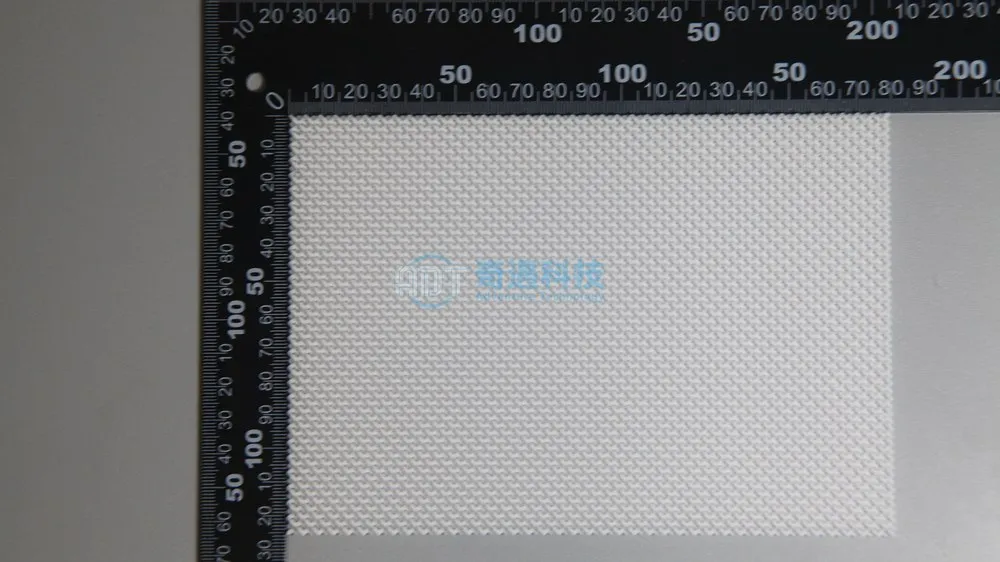
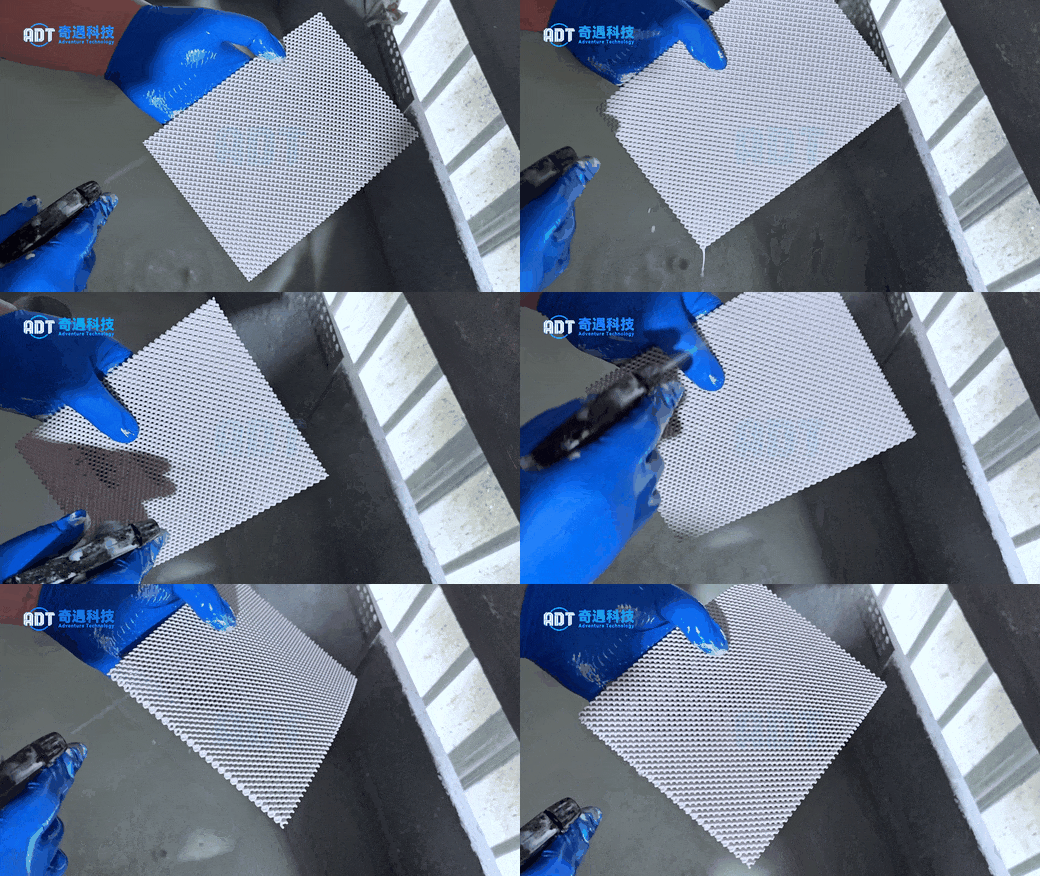
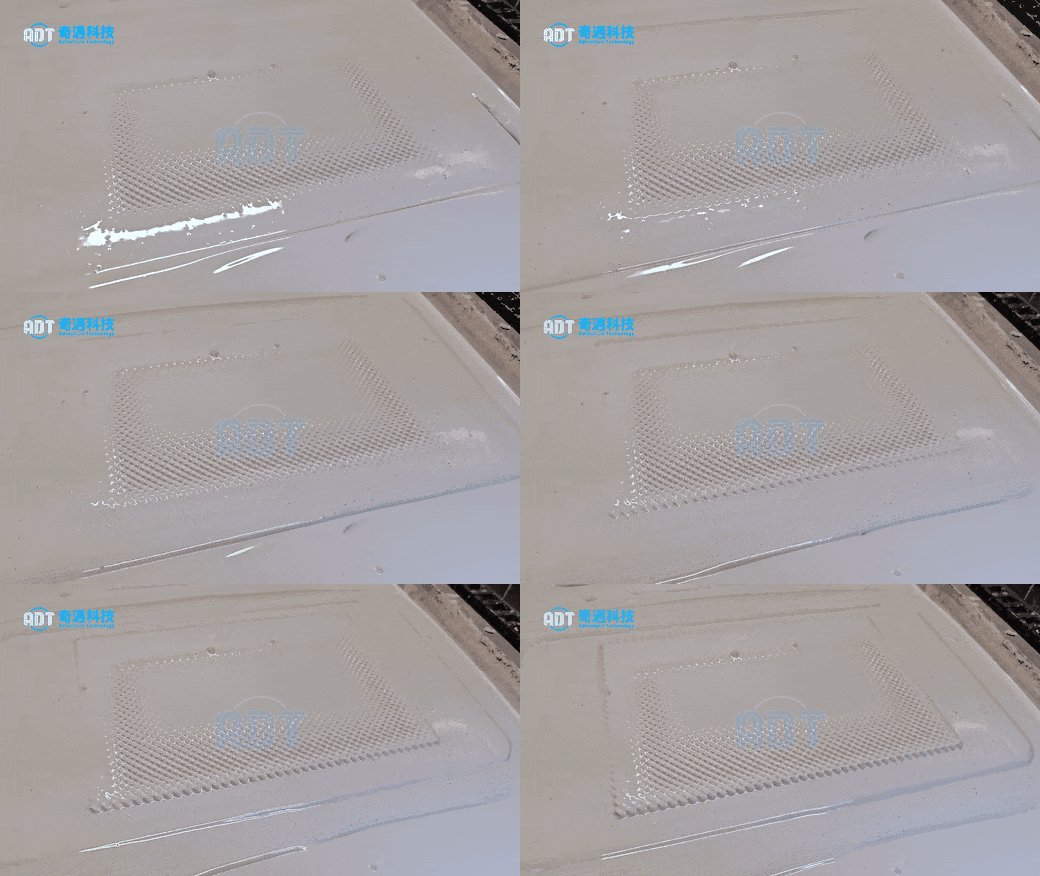
Qiyu Technology used its industrial-grade F144 ceramic 3D printer to form an alumina porous plate in a single pass. The entire face of channels is defined directly by a 3D model, using DLP photopolymerization: after slicing, each layer is projection-exposed, and ceramic particles cure along with the resin to build up a green body, which is then debound and sintered to full density. From the sample, the grid channels run through the entire plate with neat arrangement and good consistency.
The value of a porous structure isn't just about the number of pores—it's about pore consistency. Gas diffusion needs stable airflow, filtration needs low resistance, and heat exchange needs controllable flow paths. Making pores in a local area is not hard; what's hard is keeping every channel across the entire plate consistent. Ceramic 3D printing hands channel definition to the model and forms it in one pass, with no need for hole-by-hole machining—offering a viable path for customized, small-batch manufacturing.
The value of ceramic 3D printing was never just "being able to print ceramics"—it's being able to print structures that traditional processes can't make, can't make well, or can't make fast. The alumina porous plate is a typical example: dense channels, high throughput requirements, and a material that's both hard and brittle. The F144's demonstration shows that DLP ceramic 3D printing has reached engineering capability for complex porous structures—the entire chain, from model-defined channels to layer-by-layer photopolymerization to debinding and sintering densification, is now proven. For users who need customized, small-batch porous ceramic components, this is a path worth watching.


©2026 3dptimes.com All Rights Reserved