Using COBOD's technology, PERI has completed Germany's first serial 3D printed housing project, achieving significant time and cost savings over conventional methods.
PERI 3D Construction has completed what it calls Germany’s first reference project for serial 3D printed housing. The DREIHAUS (“Three-house”) development in Heidelberg was built using COBOD’s concrete 3D printing technology, which PERI says helped deliver the project faster and more cost-efficiently than conventional construction.
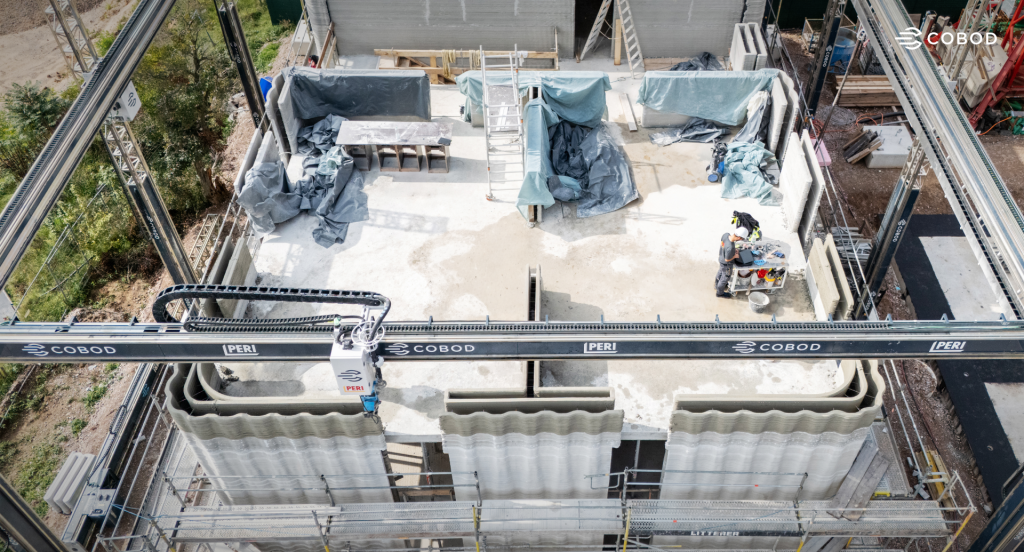
The project consists of three multi-unit building variants, S, M, and L, providing a total of 21 residential units with living spaces ranging from 46 m² to 89 m². PERI reports that the walls for the largest building were printed in just 26 working days.
26-day print for largest building
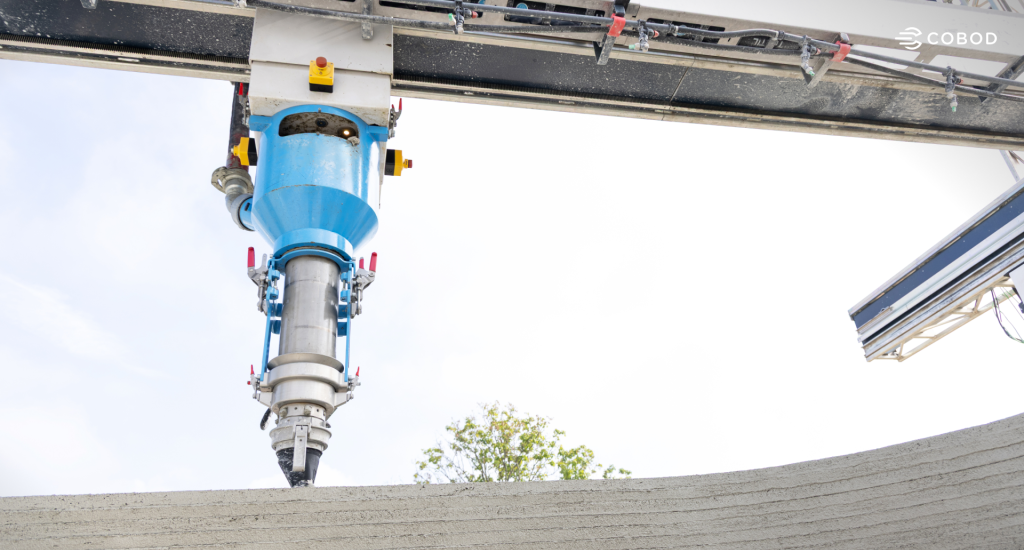
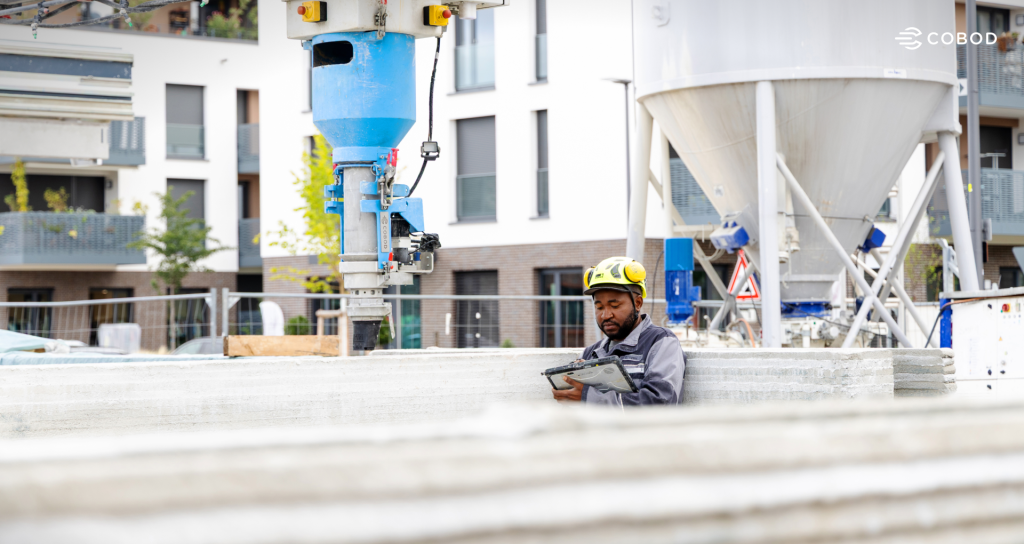
COBOD’s BOD2 printer fabricated the structures, completing one square metre of wall in about five minutes. A team of only two to three operators controlled the process via tablet or computer. PERI points to printing speed, repeatable accuracy, and reduced crew size as key contributors to the reported time and cost savings.
The DREIHAUS design is optimized for serial construction. Each building is divided into two segments, allowing one half to be printed while the concrete slab is poured on the other. PERI states that this parallel workflow shortens construction time by around 30% compared to conventional approaches.
Use of carbon-captured cement
The project incorporates Heidelberg Materials’ evoZero and evoBuild mixes, selected for their lower carbon footprint. evoZero is described as the world’s first carbon-captured net-zero cement. PERI says the combination of these materials with COBOD’s precision printing reduces concrete use and CO₂ emissions without compromising structural performance.
The DREIHAUS development was delivered in collaboration with Korte-Hoffmann Gebäudedruck, Heidelberg Materials, and SSV Architekten.
Henrik Lund-Nielsen, Founder and General Manager of COBOD International, said the project shows how automation can accelerate delivery. “By combining speed, precision, and automation, builders can finalise projects in shorter timelines, while reducing both cost and waste,” he commented.
Dr. Fabian Meyer-Brötz, Managing Director of PERI 3D Construction, described DREIHAUS as an integration of experience gained across the company’s 17 prior 3D printing projects.
Christian Schwörer, CEO of the PERI Group, called the project a milestone. “It shows that serial 3D housing construction in the German market is not just a vision for the future, but can be implemented immediately,” he said.
Scaling 3D printed concrete in construction.
Concrete 3D printing has seen rapid developments across both commercial construction and academic research. In Germany, ZÜBLIN and Instagrid have launched the InstatIQS Nelcon joint venture to scale up industrial 3D printed construction, combining ZÜBLIN’s building expertise with Instagrid’s electric power systems to develop automated, construction-ready printing workflows.
Materials innovation is also progressing: engineers at the University of New Mexico recently developed a bendable concrete mix designed to improve toughness and crack resistance in extruded structures, while researchers at the University of Pennsylvania introduced a 3D printable cement capable of enhancing CO₂ capture during curing while maintaining mechanical strength.
Precision and process reliability are being addressed through Progress Group’s SPI technology, which uses continuous process monitoring to improve dimensional accuracy in large-scale printing. Structural validation efforts are advancing as well, with the University of Bristol completing the first full-scale seismic test on a 3D printed concrete structure to assess its performance under earthquake conditions.