J.Laverack launches Speedform, a fully titanium 3D-printed road bike with optimized aerodynamics, limited to 10 units.
A new chapter in competitive cycling has begun with the launch of Speedform, a road bike entirely realized through titanium 3D printing. Developed by the British manufacturer J.Laverack and benefiting from the aerodynamic expertise of Loughborough University, this bike represents one of the most ambitious uses of metal additive manufacturing in the cycling world. Unveiled at the Rouleur Live show in London, Speedform stands as a landmark application of this technology.
The Speedform is fully produced via 3D printing. Its frame is divided into three titanium sections that are printed, assembled, and finished to form a seamless, aerodynamic structure. Liberated from the constraints of traditional tube-and-lug construction, the design team was able to sculpt the bike based on airflow requirements rather than manufacturing limitations. The result is a frame designed to fit each cyclist with millimeter precision, combined with an aerodynamic form that would be impossible to achieve with conventional methods.
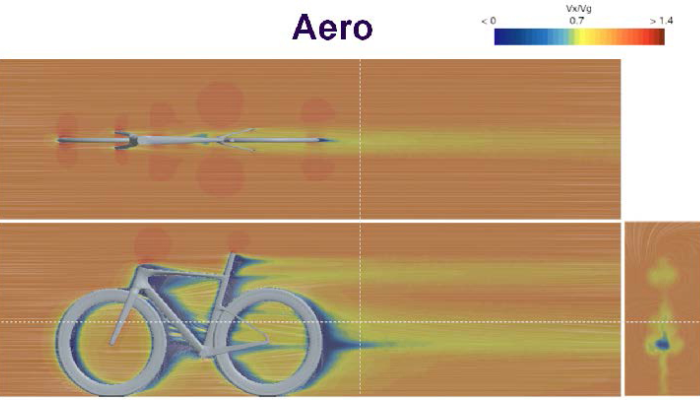
To validate these design choices, J.Laverack partnered with Loughborough University to conduct advanced computational fluid dynamics (CFD) testing. Professor A. Duncan Walker led the analysis, comparing the new bike to the company's existing road model. The tests showed a drag reduction of 20 to 26% at speeds between 30 and 48 km/h, translating to an energy saving of up to 17 watts. According to Professor Walker, these gains are the result of an intelligent form-finding process made possible by additive manufacturing.
Key features of the bike include lowered seatstays to improve airflow and stiffness, fully internal cable routing, a T47 bottom bracket, and a 3D printed KT1 seatpost with an optional 3D printed stem. J.Laverack's use of parametric design allows each frame to be tailored to the cyclist following a detailed fitting session, creating a level of customization that mass-produced carbon frames cannot match.
Co-founder Oliver Laverack describes Speedform as a demonstration of what is possible when additive manufacturing and craftsmanship work hand in hand. He emphasizes that the bike combines sculptural freedom with technical rigor, giving rise to a road machine designed for cyclists who appreciate both performance and individuality.
Only ten units will be available worldwide in 2026, positioning Speedform not only as a major technological advance but also as a collector's project that hints at the direction high-end bicycle design may take. As metal 3D printing now enables previously unattainable forms and performance characteristics, Speedform is one of the first examples of the evolution the cycling industry could undergo in the coming years.