Home  >  Materials

October 24, 2025      Materials      369

Researchers have developed a multi-temperature 3D printing technique that creates objects with programmable material properties - including temperature-responsive features like hidden QR codes - from a single polymer formulation.

Researchers from the Vienna University of Technology (TU Wien) have developed a new method that can assign desired shapes and material properties point-by-point to 3D printed objects. The versatility of this technology has been validated in several applications: for instance, it can print invisible QR codes that only become visible at specific temperatures.
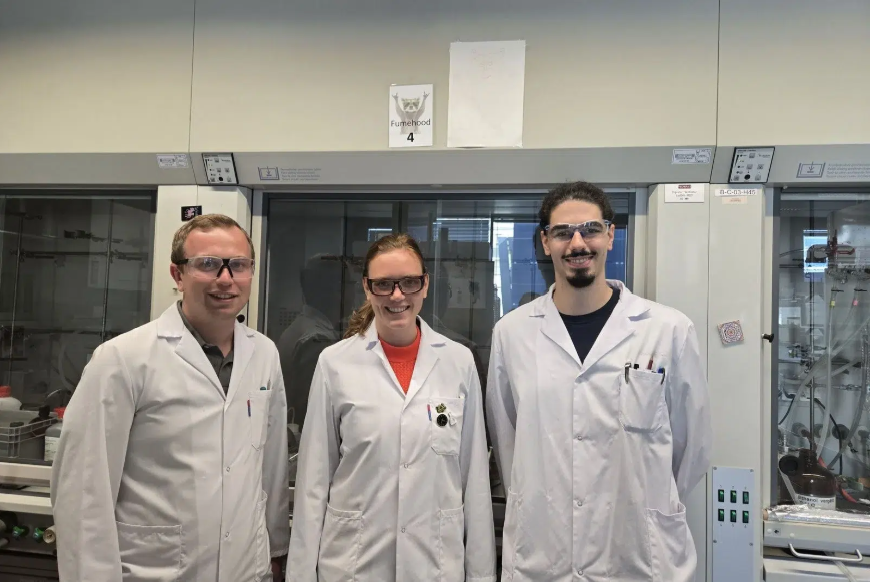
The related findings were published in a paper titled "Semi-crystalline and amorphous materials via multi-temperature 3D printing from one formulation" in the journal Nature Communications. This research was led by Katharina Ehrmann's team at the Institute of Applied Synthetic Chemistry, TU Wien.
Link to the paper: https://www.nature.com/articles/s41467-025-64092-9

The study is based on vat photopolymerization 3D printing, where a chemical reaction is triggered at precise locations where light irradiates the liquid. The molecular building blocks in the liquid combine, eventually forming a solid. By simply adjusting the printing temperature and light intensity, multi-material 3D printed polymer parts were created from a single monomer mixture. This was achieved using liquid crystal (LC) monomers combined with a trifunctional thiol crosslinker to form a highly stable liquid crystal phase.

During polymerization, the presence of the liquid crystal phase leads to significant changes in mechanical and optical properties. The proof-of-concept from bulk experiments was fully translated into 3D printing, achieving pixel-to-pixel resolution of material properties merely by changing the printing parameters of temperature and light intensity. The versatility of the produced multi-material composite parts was demonstrated in shape memory applications, as well as methods for chemical data storage and encryption.

Katharina Ehrmann stated: "We can now precisely control how the liquid hardens and the properties of the final material - by using different light intensities, different wavelengths, or different temperatures. All these can be used to influence the properties of the 3D printed material."

In this way, the researchers can control how the molecular building blocks in the liquid combine when they turn solid. They can arrange regularly to form crystals, like spaghetti in a package, or disorderly, like cooked spaghetti on a plate.

Michael Göschl and Dominik Laa are the co-first authors of the paper, both from the teams of Katharina Ehrmann and Jürgen Stampfl. Michael Göschl said: "Depending on the degree of crystallinity, the material's properties can vary greatly. Crystalline materials tend to be hard and brittle, while amorphous materials are usually soft and elastic. Optical properties can also vary widely, from glass-like transparency to opaque white."

Application Example: Invisible QR Code

The research team has demonstrated the versatility of the new method through several examples. One involved creating a QR code inside a piece of plastic, with the surface covered by a crystalline layer. However, this crystalline layer loses its crystallinity and becomes transparent at a certain temperature - making the hidden QR code instantly visible. Depending on the material and temperature, the QR code could also be temporarily disrupted, similar to a phone being temporarily inaccessible after entering an incorrect code.

Similarly, a warning symbol can be printed that only becomes visible when the material is heated above a certain temperature. This could be used, for example, to check whether a specified temperature range was exceeded during the transport of temperature-sensitive goods.

Tests on the optical properties of the printed materials were also conducted in Professor Andrei Pimenov's research group at the Institute of Solid State Physics, TU Wien. Katharina Ehrmann said: "We are opening up a whole new range of possibilities for 3D printing, from data storage and security to biomedical applications. It has potential application prospects in many different fields."


©2025 3dptimes.com All Rights Reserved