Home  >  News

July 15, 2026      News      9717

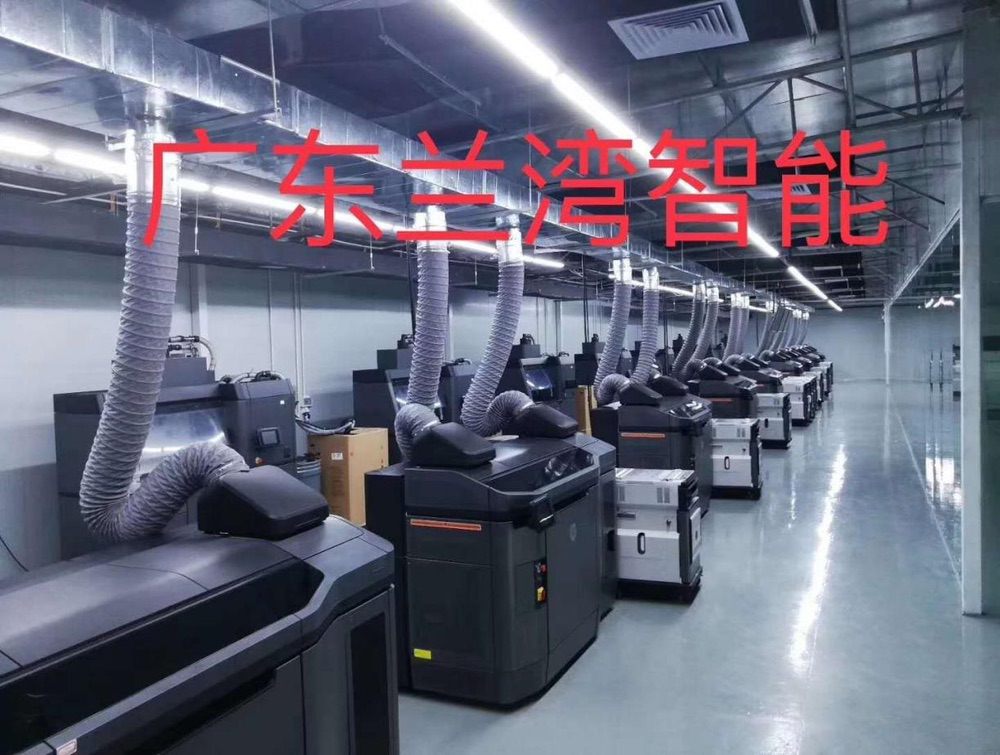
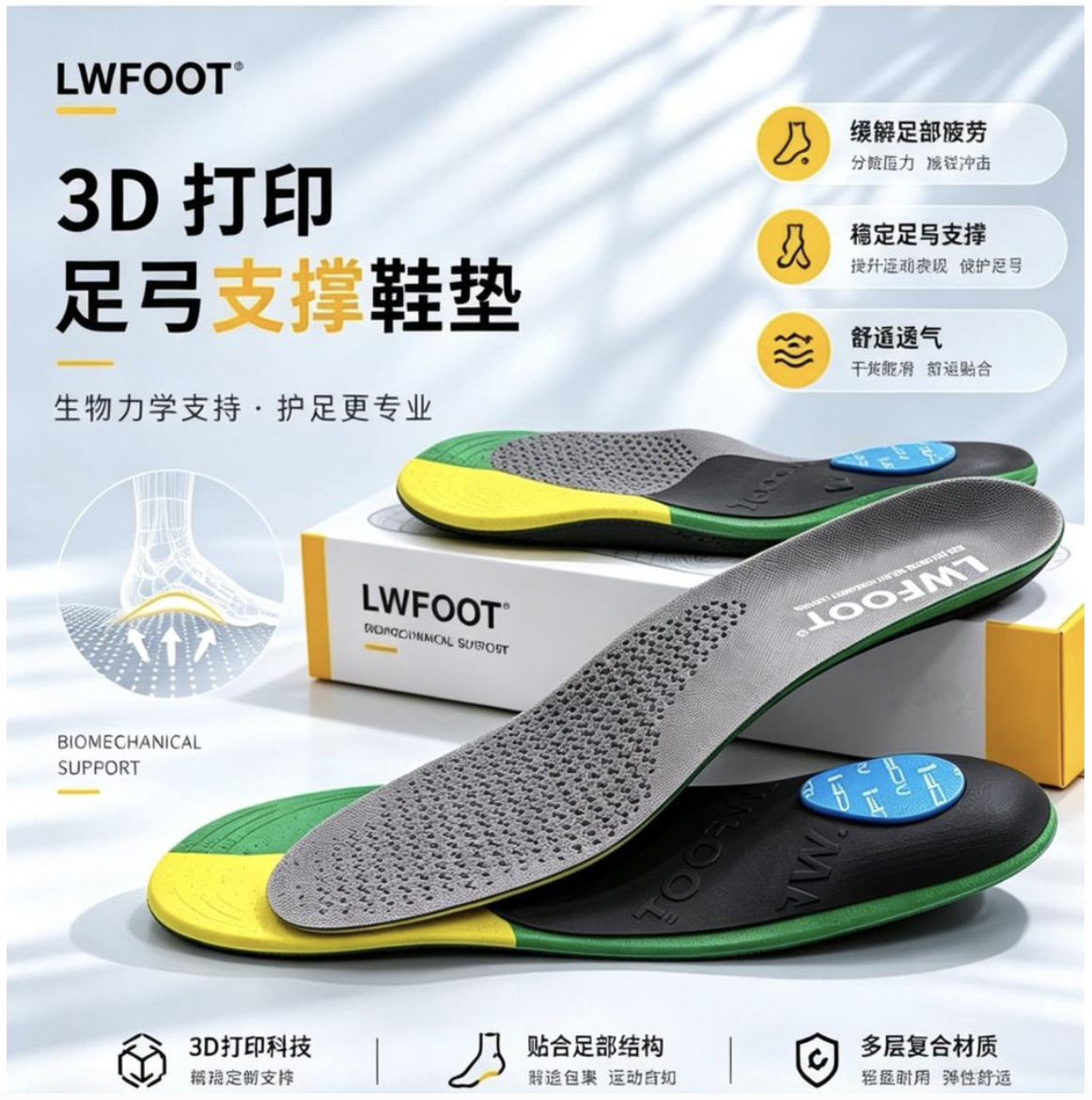
As the 3D printing industry moves from prototyping to mass customization, Guangdong Lanwan Intelligent Technology Co., Ltd. has carved out a focused niche: 3D‑printed insoles.

The company has built a complete closed‑loop business—from design and testing to volume production—and holds more than ten patents and intellectual property rights in this space.
The team’s deep roots in additive manufacturing go back to 2012, when its founder joined forces with experts from Tsinghua University, Huazhong University of Science and Technology, the Chinese Academy of Sciences, and other institutions to help kick‑start China’s 3D printing industry. In the area of batch customization, Lanwan was an early adopter of HP’s industrial 3D printing technology. One notable project involved lightweighting golf equipment for a U.S. client, where the company produced over 1.25 million customized parts in a single year—gaining solid experience in design optimization and large‑scale delivery.
Why focus on insoles? The company believes that every high‑tech innovation, no matter how advanced, ultimately exists to serve people’s daily lives. After age 50, osteoporosis, fallen arches, and chronic foot, back, and leg pain become common. Athletes and active individuals also need effective cushioning and fatigue reduction to prevent injuries. A well‑designed 3D‑printed insole provides arch support, redistributes body weight, and improves biomechanical alignment—making it a genuine necessity for people who stand or walk for long hours, seniors, teenagers, and sports enthusiasts. In China alone, the potential user base exceeds one billion, representing a market worth over 100 billion yuan (roughly 14 billion USD). Currently, most conventional insoles are made from thermoformed plastic or traditional materials, which fall far short of HP‑based 3D‑printed insoles in terms of support, comfort, and corrective performance.
The core of Lanwan’s technology lies in both the process and the materials—you can’t have one without the other. The manufacturing process demands not only high‑performance hardware and advanced materials, but also designers who are well‑versed in biomechanics. Lanwan has already matured its corrective solutions for flat feet, high arches, overpronation, and supination. Its products are now covered by national medical insurance and have been rolled out in more than 30 hospitals with impressive clinical results. The company has also developed a range of insoles specifically for athletes and seniors, securing over ten patents. Professional coaches and athletes in tennis, badminton, basketball, and marathon running have given high marks for their shock absorption and overall comfort.
On the business side, Lanwan does not sell directly to end‑users. Instead, it authorizes exclusive city‑level distributors. Domestically, it is opening applications for 100 cities; overseas, it grants exclusive rights to companies with strong local sales channels. Distributors don’t need to open physical stores—the model is completely asset‑light. They place products in high‑end foot massage parlors, gyms, sports facilities, wellness clubs, and similar venues. In a medium‑sized city, placing inventory in 300 such locations, each selling 10 pairs per month, yields 3,000 pairs monthly and over 30,000 pairs annually. In a first‑tier city, 500 outlets could push monthly sales past 5,000 pairs, surpassing 60,000 per year. This approach uses premium foot traffic to accelerate market education and shorten the payback period. So far, distributor applications have been strong, and Lanwan sticks to a philosophy of letting its partners earn twice as much as the company itself.


©2025 3dptimes.com All Rights Reserved