Beehive Industries' Frenzy engine passes key high-altitude tests, confirming flight readiness for 2026 and enabling production scale-up.
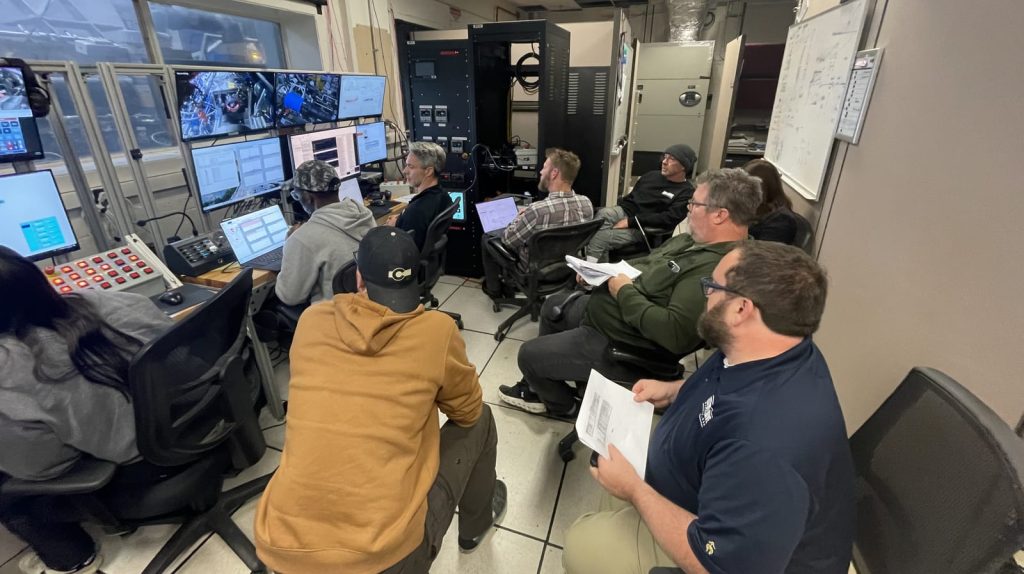
Beehive Industries, a U.S. propulsion manufacturer, has successfully completed high-altitude testing of its 200 lbf Frenzy engine, a key step toward flight trials planned for early 2026. Conducted at a government facility in Ohio, the tests confirmed the engine’s reliable performance across its full operating range. With this milestone reached on schedule, Beehive is now moving to scale production to meet growing demand.
The achievement also underscores the company’s commitment to accelerating aerospace development cycles, delivering advanced propulsion capabilities to defense programs much faster than traditional timelines allow.
“The milestone confirms Frenzy’s readiness for flight integration,” said David Kimball, Chief Technology Officer at Beehive Industries. “In less than a year, we’ve gone from concept to proven high-altitude performance — and we’re doing it ahead of schedule because of the talented and determined team at Beehive. Frenzy is now flight-ready, and our production system is ready to scale alongside it.”
Test Outcomes and Program Momentum
The altitude campaign builds on a rapid year of progress, including successful ground tests of multiple engines and the delivery of two prototypes to Ohio for further evaluation.
Throughout testing, the engines demonstrated consistent ignition at altitude, stable sustained operation, fast acceleration to full power, and fuel performance that exceeded internal expectations. Hardware inspections showed minimal wear after mission-length runs, which Beehive cites as evidence of the durability enabled by its additive-first manufacturing strategy. The company maintains that this approach allows fast iteration, reduces development risk, and supports scaling without compromising performance.
“This test campaign not only demonstrates the full potential of our engine, but also how we move with speed through a highly iterative, cross-functional development program,” Kimball added. “Each milestone strengthens our confidence in the architecture, our ability to deliver on our commitments, and the disruptive path we’re charting for next-generation propulsion. We’re not just accelerating development timelines — we’re ensuring America’s warfighters have the technology they need, when they need it most.”
Path Toward Flight Trials and Production
With high-altitude testing now complete, Beehive is preparing for flight trials in the first quarter of 2026 — the final step before the program moves into low-rate initial production. The company’s facilities in Denver, Cincinnati, and Knoxville are already increasing capacity to meet anticipated demand.
The Frenzy engine family, introduced in late 2024, has progressed rapidly under a $12.46 million contract from the U.S. Air Force Rapid Sustainment Office and the University of Dayton Research Institute. Spanning thrust classes from 100 to 300 lbf, the engines are designed for next-generation uncrewed aerial systems that require greater efficiency, reliability, and cost-effective performance.
Expanding 3D Printing’s Role in UAV Development
Beehive Industries has been at the forefront of applying AM to propulsion for uncrewed aerial vehicles. The company first introduced the Rampart engine, a fully 3D printed system developed for the Collaborative Combat Aircraft (CCA) framework. Nicknamed “The Force Multiplier,” Rampart is designed for UAVs operating alongside manned fighter aircraft in high-threat environments, supporting missions such as strike operations, intelligence gathering, decoy deployment, and logistics support.
Beehive’s efforts reflect a broader trend in the aerospace and defense sectors, where organizations are leveraging 3D printing to advance UAV programs. In August, Firestorm Labs secured a five-year, $100 million Indefinite Delivery, Indefinite Quantity (IDIQ) from USAF to develop and supply modular unmanned aerial systems. Specializing in Group 1-3 UAS for ISR and tactical support, Firestorm uses AM to produce components locally and on demand, reducing reliance on centralized factories, shortening timelines, and improving adaptability in contested environments.